While building my house/workshop, I was faced with a dilemma. The terrain of my property was steep and very rocky. I knew I would need to move tons of material around and it was quite impossible to do anything useful with a shovel in such terrain. So, shall I pay a lot of money to someone who would do the digging for me or rather buy a very old excavator that will eat up a lot of time, money and energy maintaining, but will be at my service any time I needed? Oh come on, what dilemma is that? I've always wanted to own an excavator and this was the the proper excuse to buy it.
Getting the machine
What I'm looking for
What kind of excavator and how big? I'm quite fond of backhoe loaders, they can dig holes as ordinary excavators, but also transport a lot of material around, move the pallets with bricks and so on and the price of machines like 30 years old aren't the expensive, but such machines are hard to transport and are not very good for confined spaces and steep terrain.
My property is quite steep, the loader could get easily tipped, it's also quite rocky, the rocks are sharp or get very sharp once crushed, so it's not very gentle for rubber tires or tracks. So we are talking about standard excavator on tracks, steel tracks to be more precise - these will survive the rocky terrain, but are not very good for pavements and roads, so preferably steel tracks with protective rubber attachments for later stages of the construction.
The excavators around 1.5t and lower are quite popular due to possibility of hauling them behind and ordinary family car, therefore quite expensive, the digging force is also not very high, so not very suitable for big rocks. On the other hand, the big old machines are very cheap, can do a heavy work, but are very expensive to transport to the site and maintain. So let's stick with 2-5t range which is a nice compromise between digging power, size, transportability, cost to maintain, price,...
The last criteria is the age. Old machines are cheaper, dead simple (easy/cheap to repair and maintain), but also usually quite worn out, rusted, less comfortable and without all the bells and whistles of more recent designs (joystic controls, hydraulic thumb, aux circuit, air conditioning,...). The newer excavators are comfortable, have all he equipment you could dream of including wipers and heated seats, but it can get crazy expensive when something breaks (try buying a new electronic control board for older excavator or changing a hydraulic hose buried deep in the machine behind all the other hoses and stuff), the price is usually higher and drops faster with age.
There are some brand new chinese machines for a reasonable prices and there are already few importers in the local area, but these come with a cost of a rapid price fall as no one will trust a few years old chinese excavator in a way people are trusting 20+ years old komatsu/yanmar/bobcat/... machines. I've spent some time doing research on this topic - they work, are cheap, have a lot of cheap compatible buckets and stuff, but tend to break for stupid reasons (hose chafed through a frame due to vibrations, ground wire that fell off, broken pins, leaking pumps,...) and you risk spending 1:1 time excavating to repairing. This was not the path I wanted to follow.
To summarize my dream excavator:
- cheap
- 2-5t range
- well known manufacturer
- steel tracks with rubber shoes included
- reasonably maintained and with a reasonable wear (I need to use it after buying, not spend month repairing everything as I'm used to with all my other projects)
- reasonably old to avoid electrical systems more complex than a starter switch, but not too old to be able to get all the parts needed to repair it
- common, well known and reliable diesel engine
- preferably with all the additional gear included (various buckets, quick-coupler,...)
What's on the market
I've visited few "cheap" excavators offers before finding the right one, the price limit I've decided to set removed all the excavators in a reasonable shape and left me mostly with some expensive piles of oil, steel and rust from which I needed to select one. I've also seen few more recent and damaged excavators for interesting price, e.g. one very good looking Wacker Neuson with wrecked swivel hydraulic motor, some other machine with missing tracking motor, but the price for hydraulic parts like motors and pumps is insanely high, so it was not worth the risk. There was also a very cheap 12t machine twice as old as I am in a working state, but that was quite an overkill for my purpose.
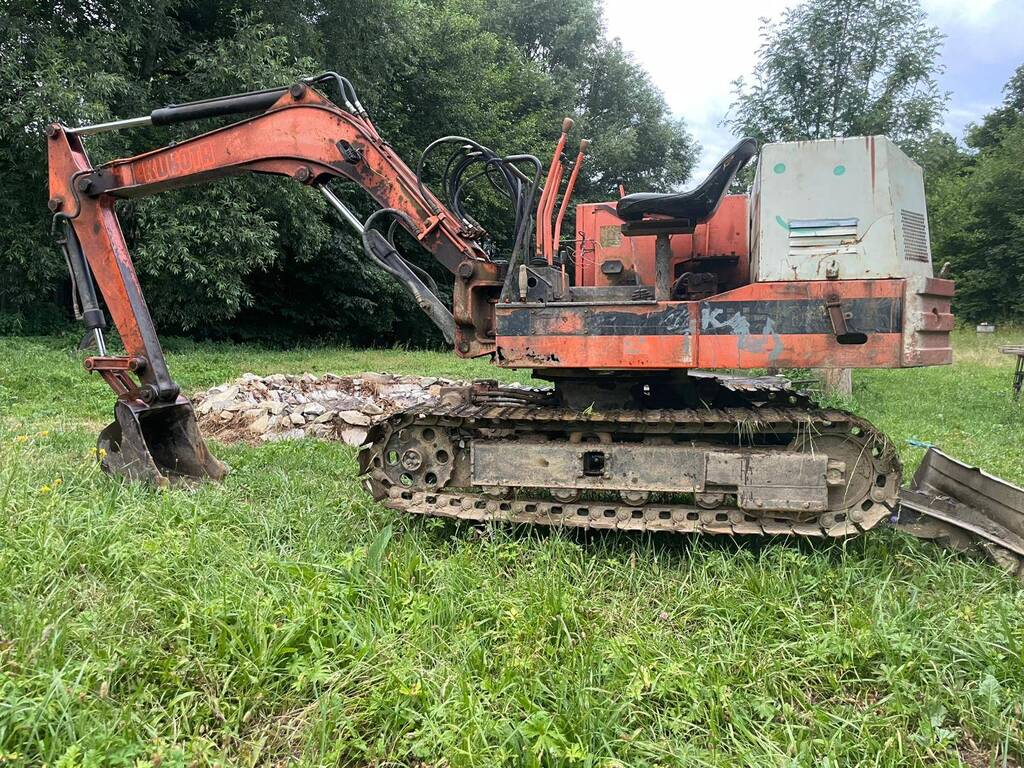
Excavator 1, Unknown 3t Yanmar
The first offer I went to see personally was, well, how to say it, I have some mixed feelings. I quite liked the way it looked. It was not heavily rusted (except few holes on the floor and side covers), the wear of the boom and stuff was reasonable, it started right away without any hesitation and the engine sounded good. There were some minor hydraulic leaks from the cylinders, nothing horrible. But there were some major downsides. We were not able to lift it up on the boom and the blade, there was some faint white smoke coming out of the breather hose (leaking piston rings?) and the worst part were the steel tracks. The sprocket was heavily worn out, the teeth were almost missing, I couldn't believe it was able to move without slipping on the sprocket. The tracks bushings were worn through and half of the pins inside were ground away too, it was miracle it was still holding together. The price was quite low, but I was not willing to buy the new steel tracks at the same price as the excavator itself...
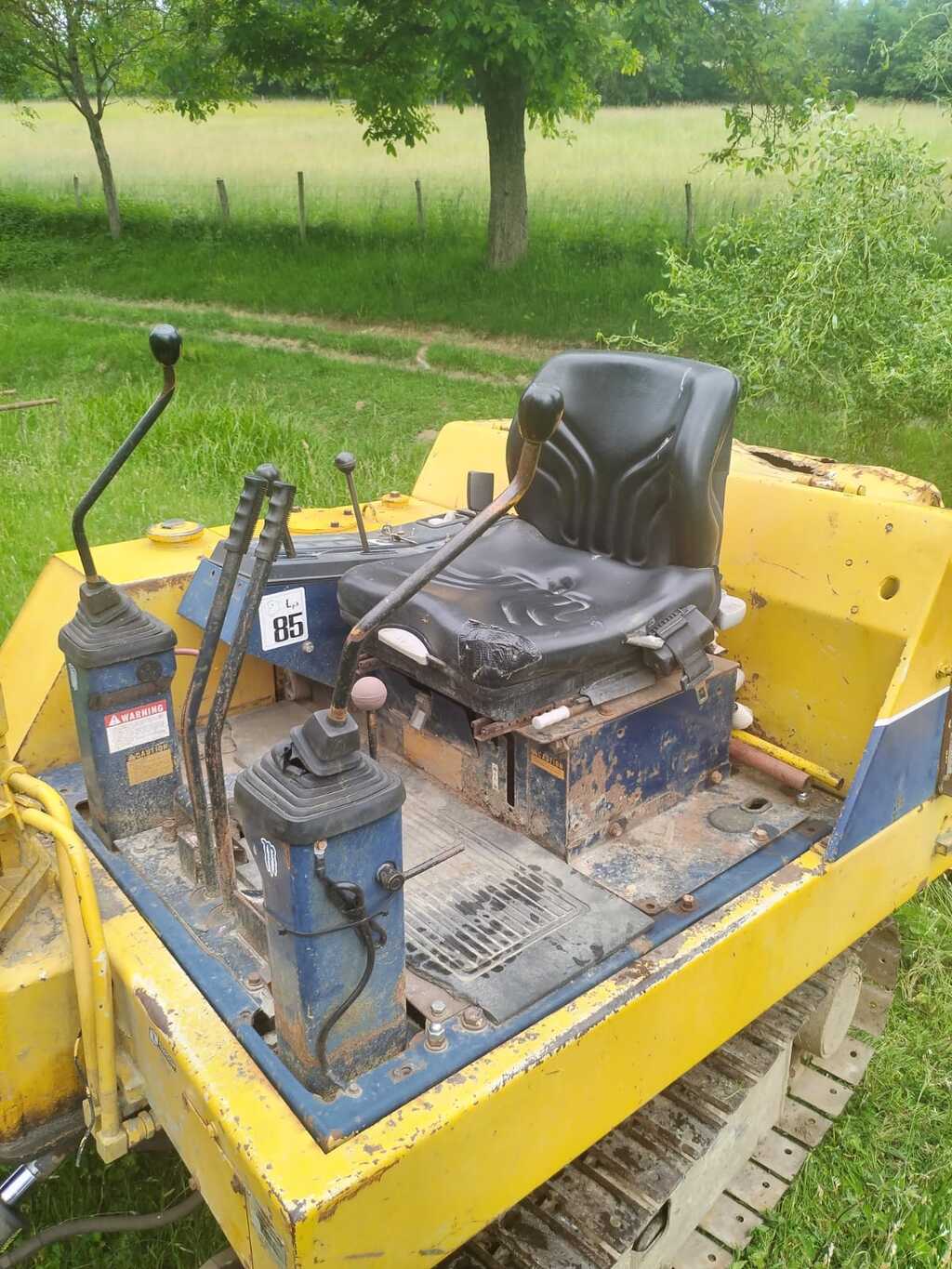
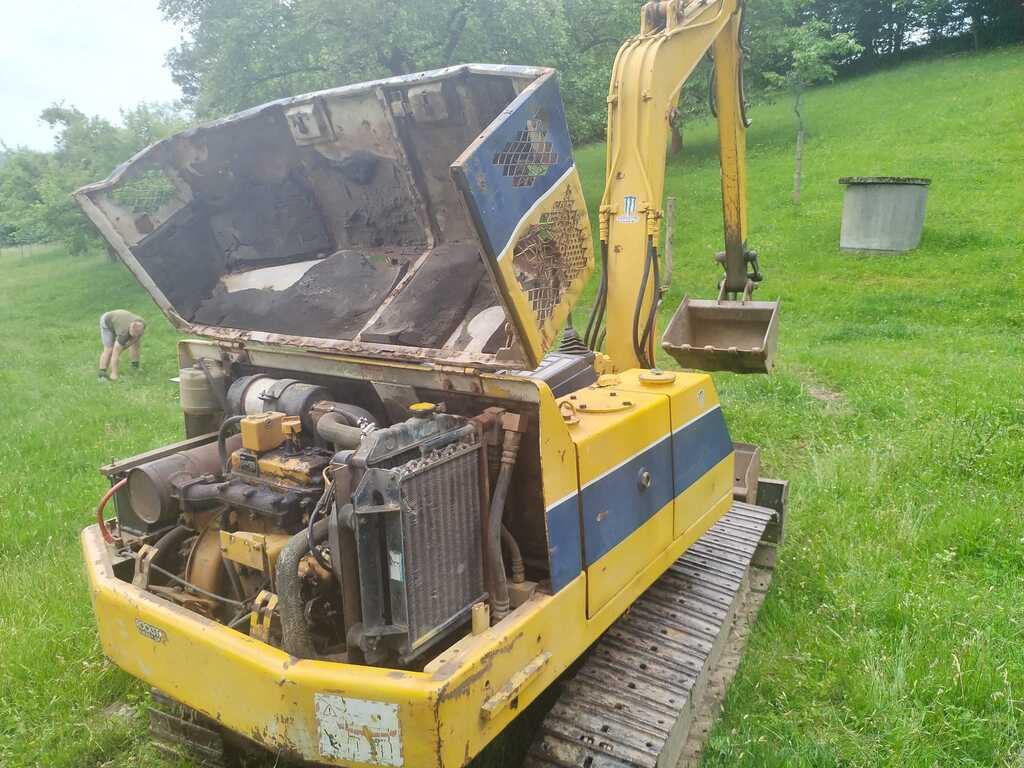
Excavator 2, Komatsu PC20-6
I looked well on the photos, except the rusted engine cover, but the reality was different. It was rusted much more, all the rubber parts around controls were torn apart by age and UV light, one of the control stick was "tricky to use", meaning you had to move it just the right way to make it work, the steel tracks were worn to a similar extend as on the first excavator, the wear on the boom/arm was horrible, you could move the bucket from one side to another for over a meter before it stopped. Engine was completely quite oiled, the engine cover was rusted through on several places and the price was twice as high as the first excavator, so no go for me.
Excavator 3
This one really caught my eye on the photos. It was one generation younger than the previous ones, looked nice and had some comfy additions like a pedal to control the boom swing, two speed track motors,... Well, first of all, the boom swing cylinder was leaking as hell, it was almost squirting the hydraulic oil once the engine was started. The rubber tracks were quite old and it was a question or hundreds of meters before they would torn apart and the worst part, the undercarriage was rusted through on many places, not a good sign for a 3t machine. I guess it was standing somewhere in the sea or something to get so damaged.On the other side, the engine was clean, running nicely, the hydraulics was strong (lifted itself without hesitation) and there was almost no wear in the pins and bushings. But I was not willing to risk the undercarriage collapsing under me when working on a steep hill... Unfortunately I don't have a photo to show you....
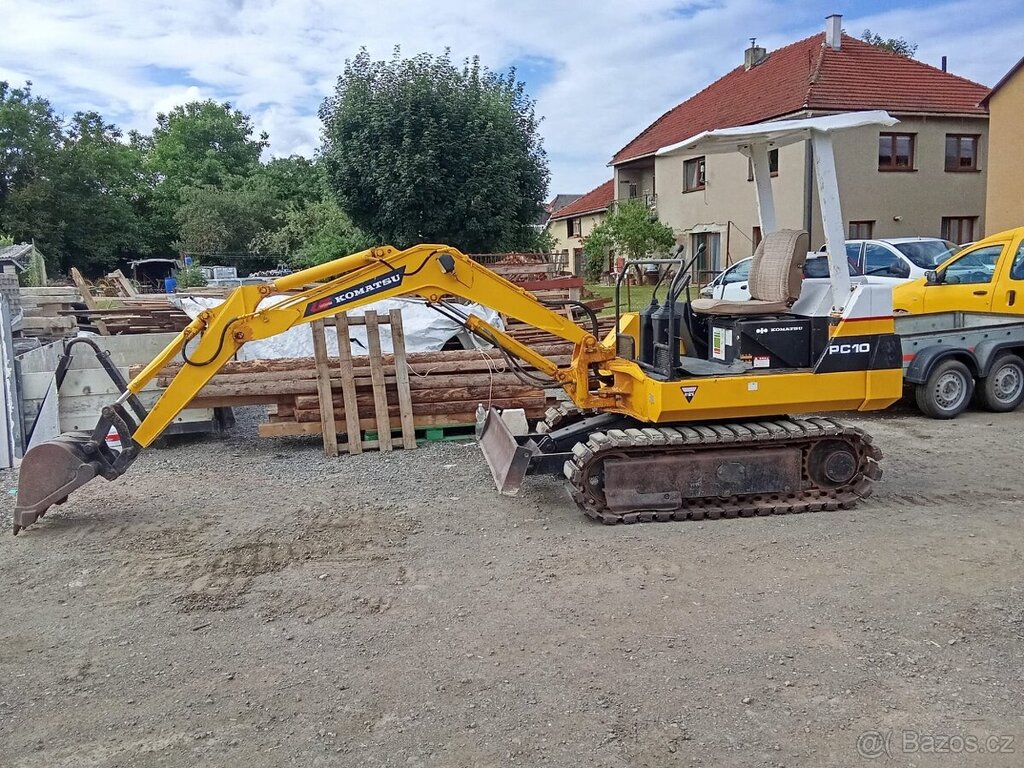
Excavator 4, Komatsu PC10-6
While checking the excavator 3, another one caught my eye, it was standing just few meters away. It was obviously repainted, the new paint was already flaking and falling off, but it was not rusted, steel tracks were looking almost like new, there was no trace of oil on the engine, I've even found stickers from few years ago with oil and filters changes, the play in the bushings was ok,... But the guy told me it was already reserved and the new owner is going to pick it today. What a shame. The very next day while checking the ads, I've seem the same excavator (with higher price by something like 15%) in a city few km away from the original location. Someone though the original price was very good so he bough it, bumped the price and started selling it again. What a shame. To make the long story short, I've bought it.
What I've bought
Overview:
- Komatsu PC10-6 from 90s
- 1 liter 3 cylinder diesel engine, 14 kW
- 2.25t according to the manual, 2950 kg according to the non-original sticker on the chassis
- Sold with only stock bucket, no AUX circuit,...

Excavator condition:
- some rust here and there, nothing really bad, only the floor is rusted through on few places
- hydraulic hoses in a very nice condition, the surface is slightly affected by UV light, but there are no cracks, no peeling layers, no leaks,...
- hydraulic seems to be strong, the machine lifts itself easily, the movements are fast,...
- engine looks like new, no oil marks anywhere, starts right away, no colored smoke,...
- pins and bushings are not worn that much, the bucket is bit loose, but this can be fixed with some shims
- rubber covers around the controls are like new, probably changed not very long ago
- the operator seat is like new, but not original, it's mounted using only two screws to some newly drilled holes
- horn is not working
- light is not working
- "new" layer of paint flaking heavily
- some oil drops on the bottom below the swivel
- boom piston slightly leaking
- swing piston rusted a bit
- some track rollers are not moving very smoothly when turned by hand, one was impossible to turn by hand, but turns when tracking
- tracks are in a pretty good shape, the rubber protectors mounted on tracks seen better times, but there's still a lot of life left in there
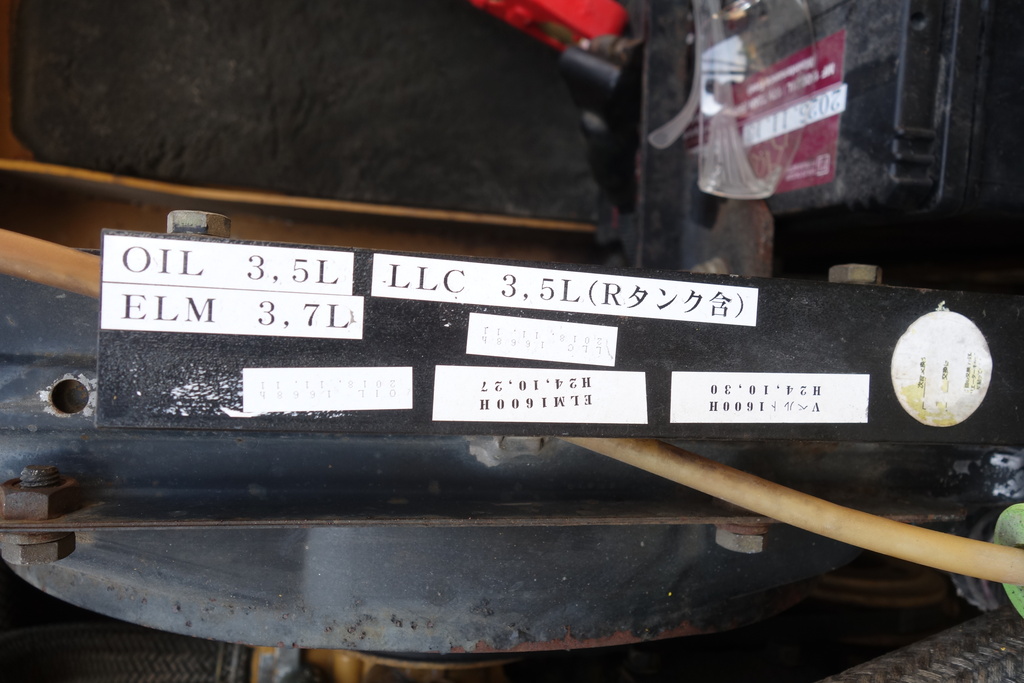
- stickers next to the engine showed that the engine oil was changed in 2018 with 1668 hours on the clock
- the engine hours counter showed 1688 hours and was working. Not sure I can trust these numbers....
After-buy care
Starter
I've moved some gravel around after the machine arrived to my property to get familiar a bit and when trying to start it the other day, nothing happened. Turning the key caused only starter to click mechanically. After a quick debugging, I've narrowed it down to the starter motor.
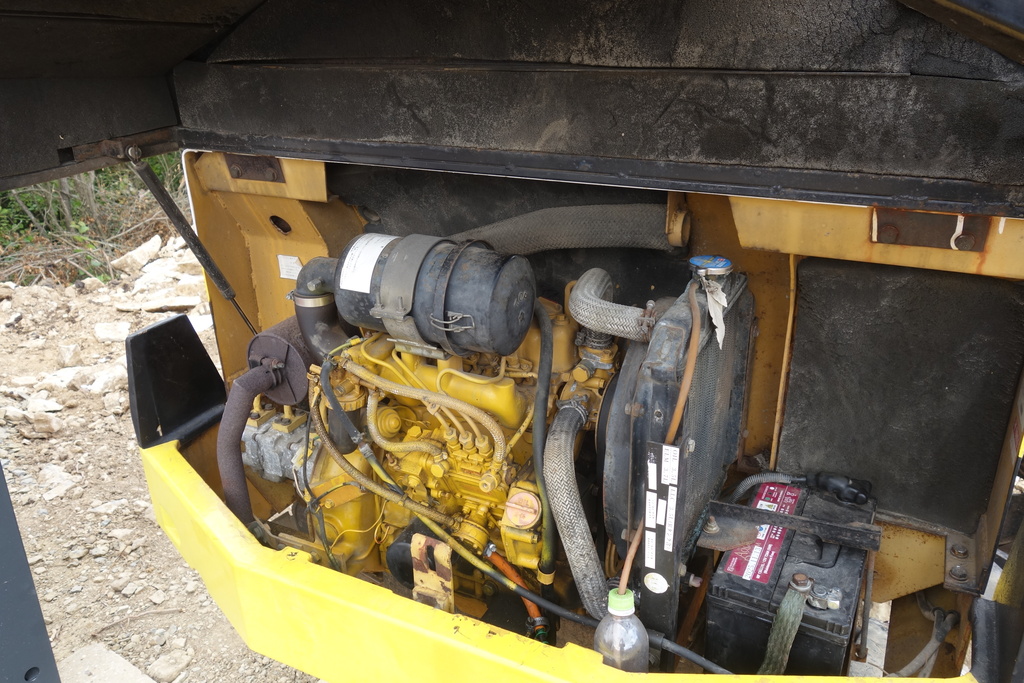
Taking it out was quite a challenge. The piston that is supposed to hold the engine cover up when opened is probably way too old and the pressure inside leaked a bit as it couldn't hold it up for very long, fixed that with a wooden stick, removed cables from the starter without looking as the started is hidden behind the engine and access there is horrible and tried to remove the starter itself. I couldn't get any reasonable tooling to the bolts, so I had to use the good old wrench moving it few degrees at time as there was no space around before getting the starter loose. WIth the started removed, I needed to pull it out from behind the engine which took like 10 minutes of trial and failure before finding just the right spot where there was enough space between the excavator chassis and the engine for the poor starter to be pulled out.
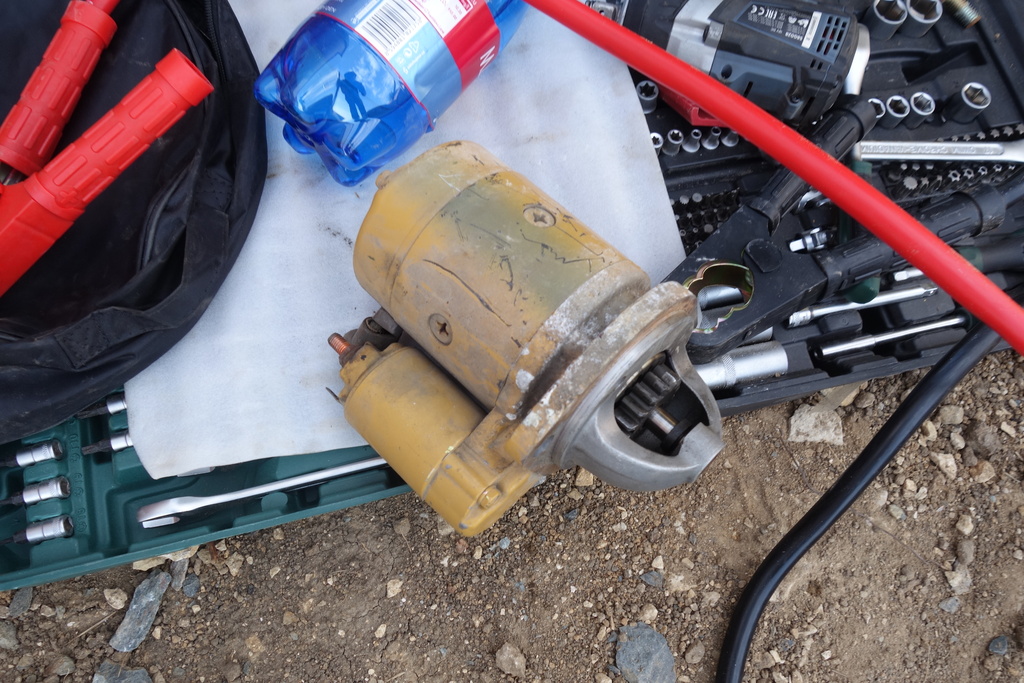
To make the long story short, the carbon brushes of the starter motor were worn completely. I couldn't find brushes of the correct shape locally, so I've bought bigger ones and sanded them to a proper dimension. And while I was there, I scraped the flaking paint from the starter, cleaned up the oxidization on the aluminum part and painted it with a rattle can before putting back to the excavator.
Manuals
Before doing any serious maintenance works, I needed to get the part numbers to order, manuals to see what needs to be done and how, etc. The issue with the excavators and similar working machines is the manuals are nowhere to be found, unless you want to pay something like 50 dollars for PDF from some random website. I would expect that manuals for machines costing thousands of dollars would be shared for free, especially for such old machines as mine... This is stupid and I'm not willing to pay for 30 years old manual just to get the part numbers and tightening forces for filter change...
After spending some time with google and AI, I've managed to find the owner manual in PDF, a good start, at least to know what that red lever hanging on the fuse box is. Then I've found a workshop manual, unfortunately not in the PDF, but rather a webpage, where each manual page is another html page with a jpeg of the page. Great, we are in 21. century, so I've let AI to scrape that webpage into the searchable PDF. The last and most painful task was to get the part manual, you know, just to be sure where that washer left on the workbench (after everything was put back together) belongs.
There are few services online, showing the part diagrams together with parts numbers, but again, behind a paywall, so you need to pay to see the part number, to be able to buy that part from the site owner, hell no. Fortunately, I've found a shady russian webpage, a 1:1 clone of that paywalled web, but with all the expensive details in plain text. So another discussion with AI and a script for scraping the page was done, it downloaded the images, created a tables with part numbers, made the images clickable, linking directly to the items in the tables and saved everything into a PDF with a nice TOC to get to the required details fast.
Fluids and filters
After the starter motor was fixed and the motor was running happily, I've started with after-buy maintenance, that means changing all the fluids and filters, after all, the labels noted the last oil change was 8 years ago (although the oil was not that bad). So, the engine oil first.
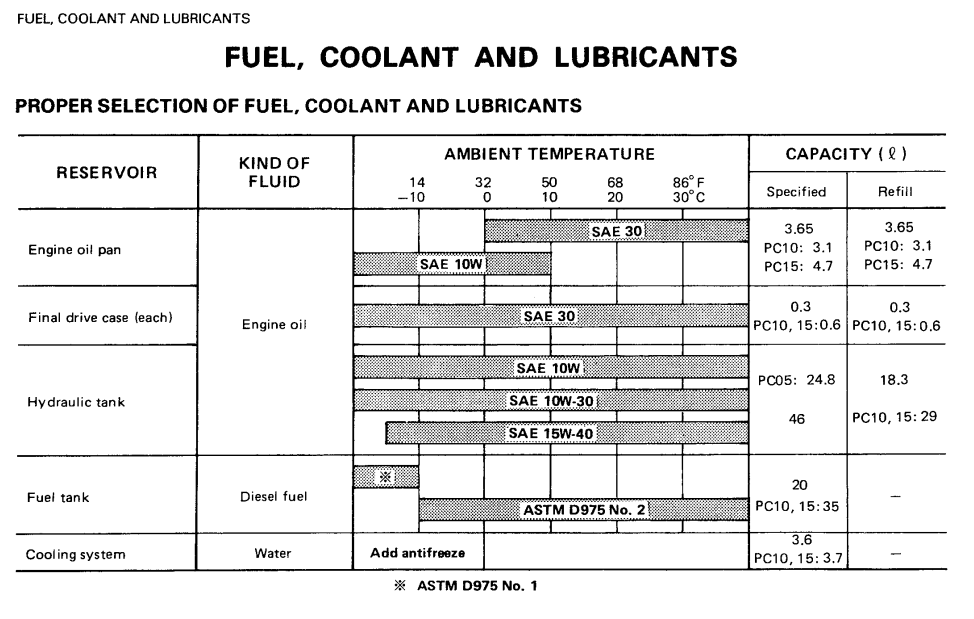
The markings on the filter were quite useless, some Chinese stuff, some normal letters, but no online results for this. The part number shown mostly the dealerships with overpriced filters, after some digging, I've found a matching cheap standard filter. A lot of head scratching came from the engine oil, the manual recommends SAE10W for cold weather, SAE 30 for warm. Such monograde oils are hard to get nowadays, after digging through a lot of online discussions and oil manuals, I've ended upwith diesel 15W40 oil that should be very close to the original specs and work quite well for all weather conditions.
After lot more digging, I've found a cheaper, but still a bit overpriced replacement for air filter, so I gave a filter housing and dust collecting cup a thorough cleanup with a rag and cleaner spray, and replaced the old filter with a shiny new one.
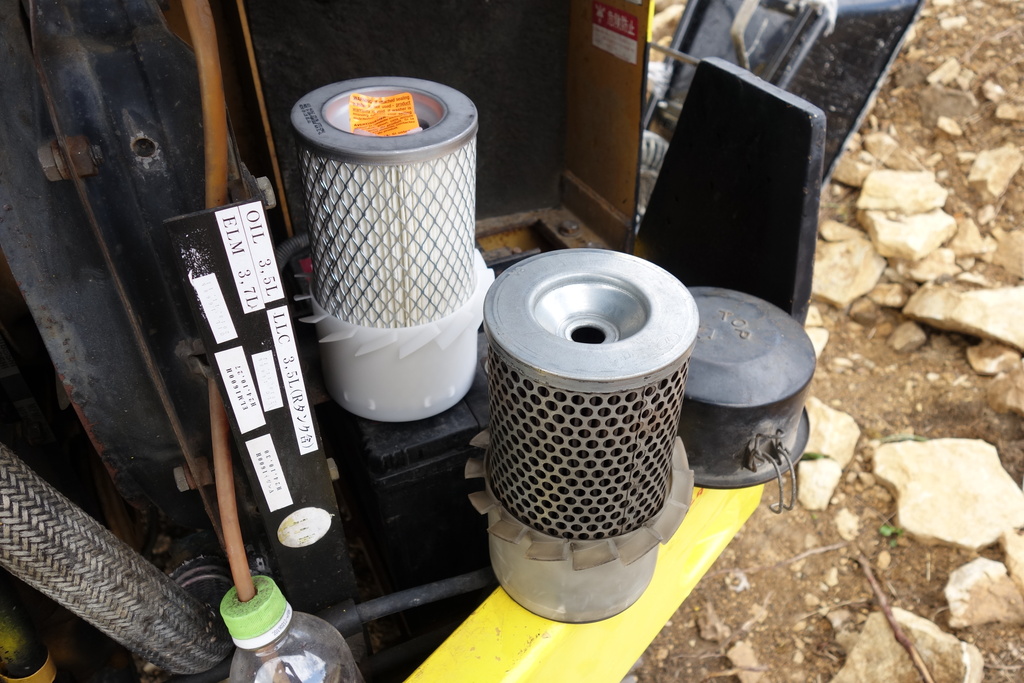
The fuel filter was heavily clogged, I couldn't even see it through the dirty plastic housing. Fortunately, the new one was cheap.
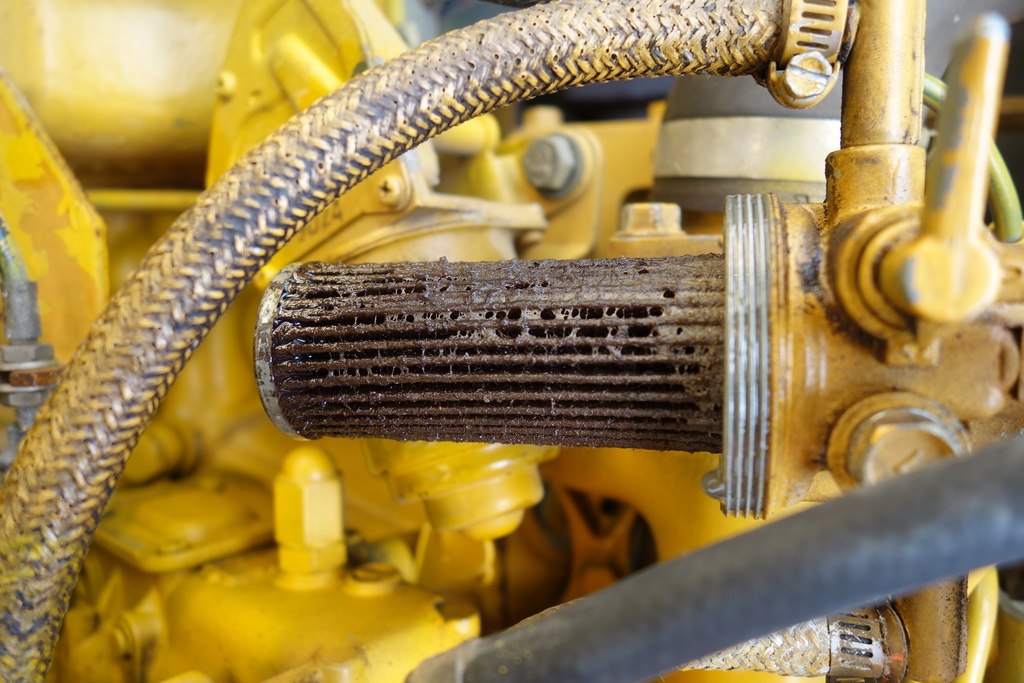
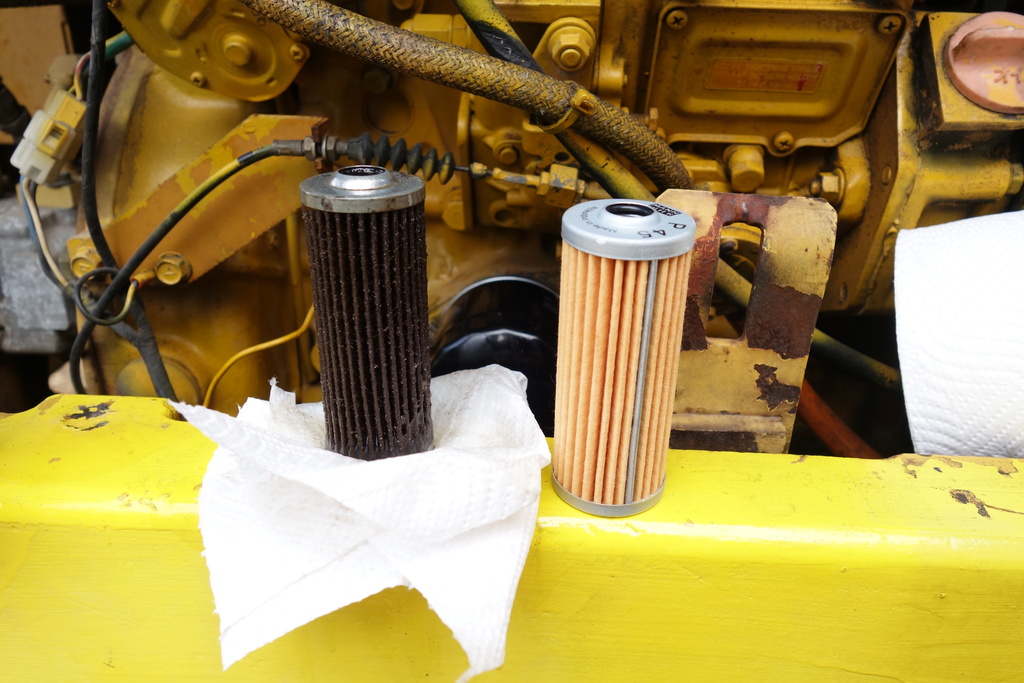
One of the fuel lines was repaired before, the other one was showing surface cracks, so I've use this as an excuse replace hoses and drain the fuel tank (I had to poke the drain plug with a stick to puncture the collected debris on the tank bottom) to clean it from any rust and dirt that collected inside over years. And I've also replaced the tube of the fuel gauge as it was no longer transparent.
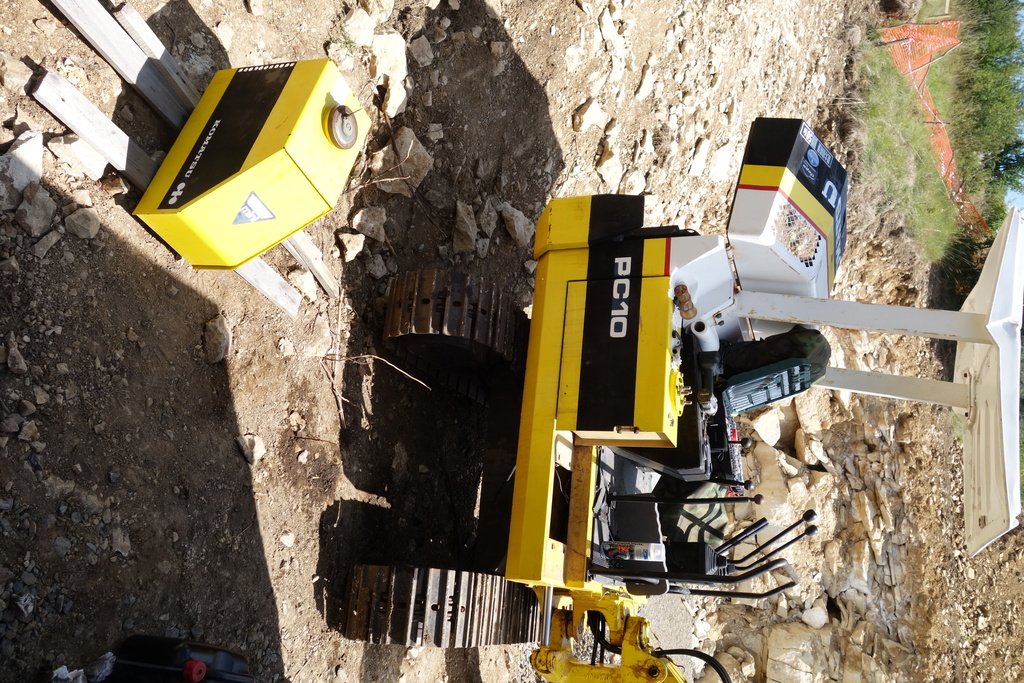
The next was the final drive oil, again, the SAE 30 is something that's hard to come by and replacing it with a standard motor oil didn't seem like a good idea, a lot of time with the internet later, I've ended up buying the expensive CAT TDTO 30 designed for such usage. When draining the final drives, I was surprised in a good way, the oil inside was almost like new, no black thick goo I was originally expecting. It was probably changed not a long time ago, but I've replaced it anyway.
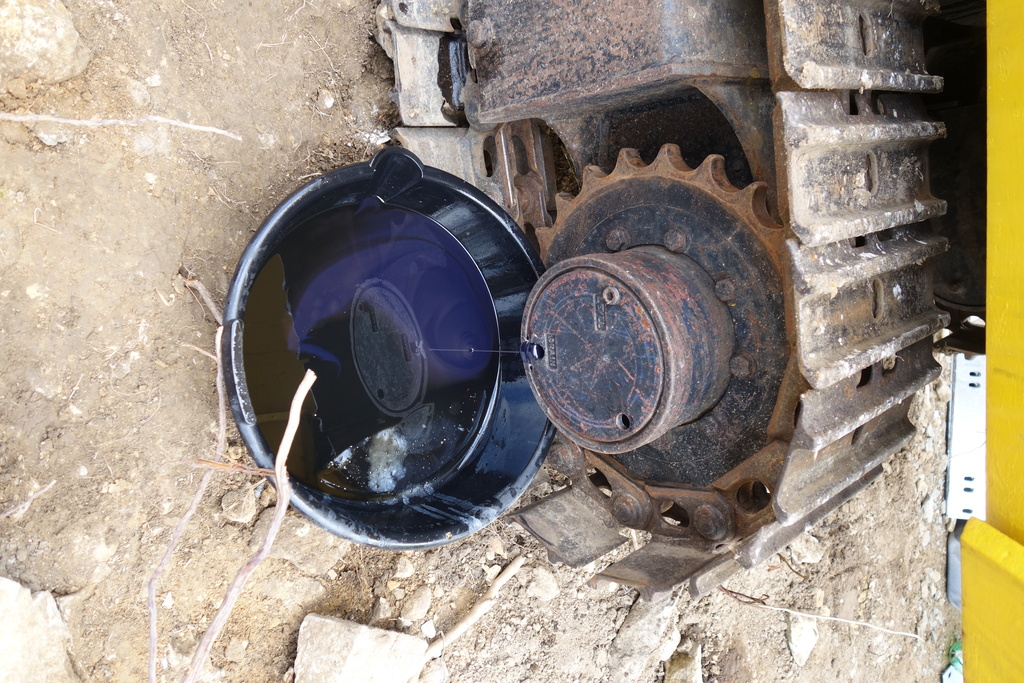
Finally, the last fluid is the hydraulic oil. I was a bit reluctant to do the changed, the hydraulic oil was reasonably clean, the filter looked ok, but the oil type was unknown. The manual required monograde engine oil, which is quite rare and expensive. After careful consideration, I've decided to replace the oil with standard hydraulic oil HVLP VG 46. It's cheap (reasonably), standard and shall have similar properties to the oil suggested in the manual, although it's a bit thinner, so I would expect some leaks if there are some almost dead seals in the system.
There's oil plug on the bottom of the oil tank, just unscrew it (after removing the top cover) and catch 30 liters of the hydraulic oil into a suitable container (which is much trickier than I've expected, as the funnel I've used was draining way to slow, it overfilled quickly and I've made a pretty solid mess before putting the plug back. After removing the bottom cover, I've finally got to see the bottom oil filter that was, well, how to put it, just like brand new, but I've replaced it anyway and cleaned the oil tank cover from all the gunk that accumulated over the years.
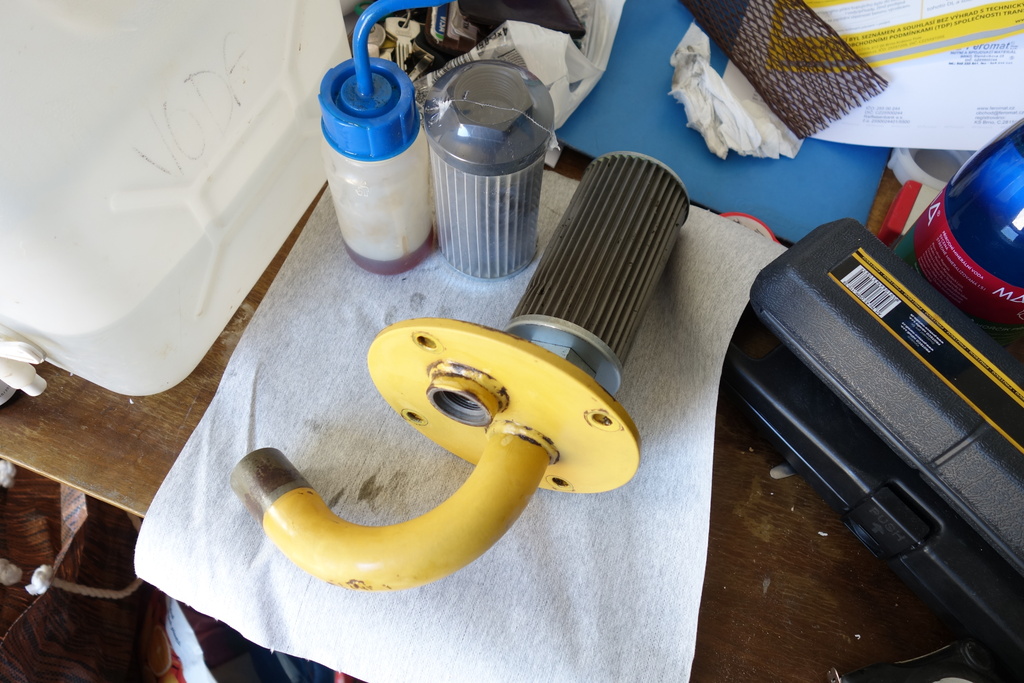
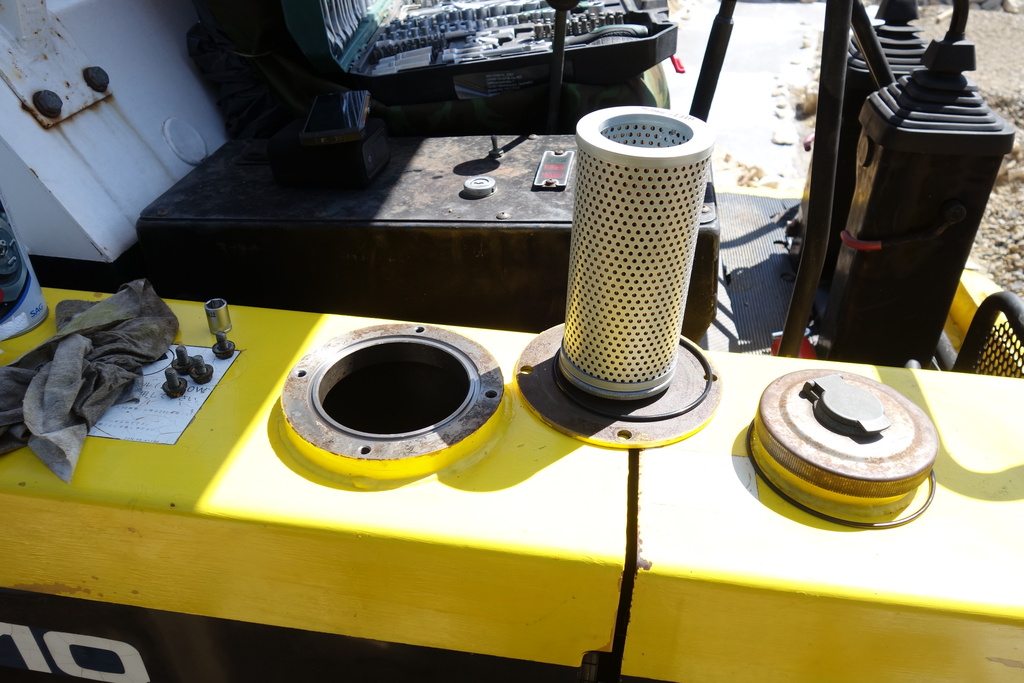
The top filter is much easier, just swap put a new one there and change the o-ring.
And btw, I've replaced the labels with current ones:
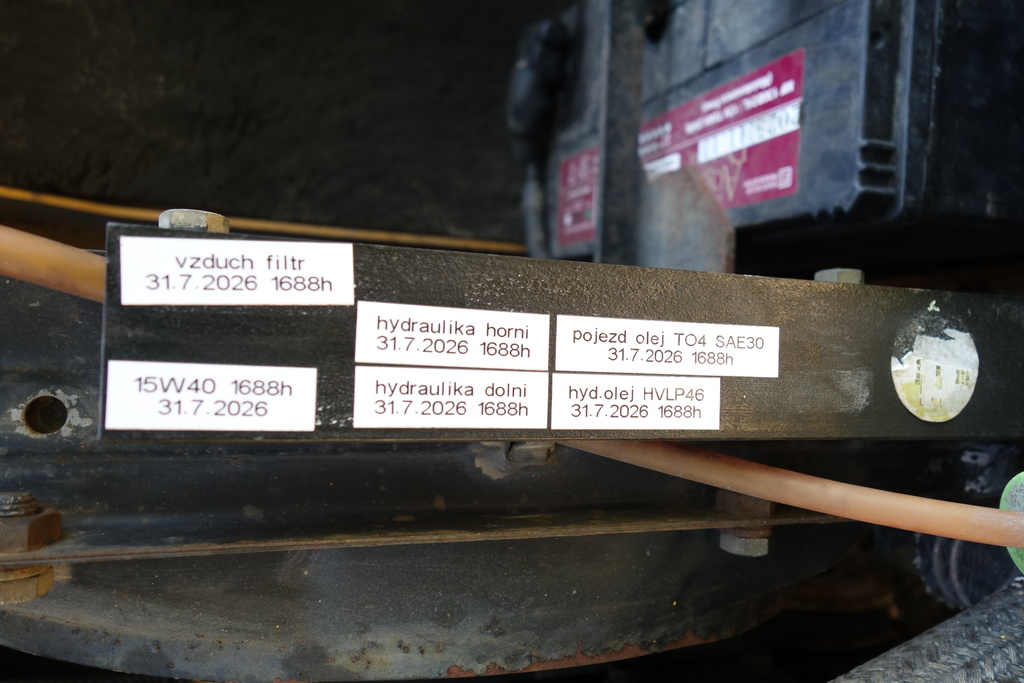
If anyone's interested, this is what I've ended up with:
- Engine oil: 3.1L of diesel 15W40
- Engine oil filter: Mann Filter W 811/80, sealing ring Dowty type for M22
- Air filter: HIFI FILTER SA 11522 K
- Fuel filter: Mann P45, sealing o-ring 45x3
- Hydraulic oil: HVLP VG 46
- Upper hydraulic filter: HiFi SH 60216, o-ring 116x3.5
- Lower hydraulic filter: HiFi SH 60216, o-ring 100x3
- Final drive oil: CAT TDTO 30
Cleaning and rust removal
I've removed all the covers to see the shape of the internal parts, there was some rust, but nothing horrible. Some dirt collected behind panels on the undercarriage, but again, nothing serious, no rusted pipes or anything like that.
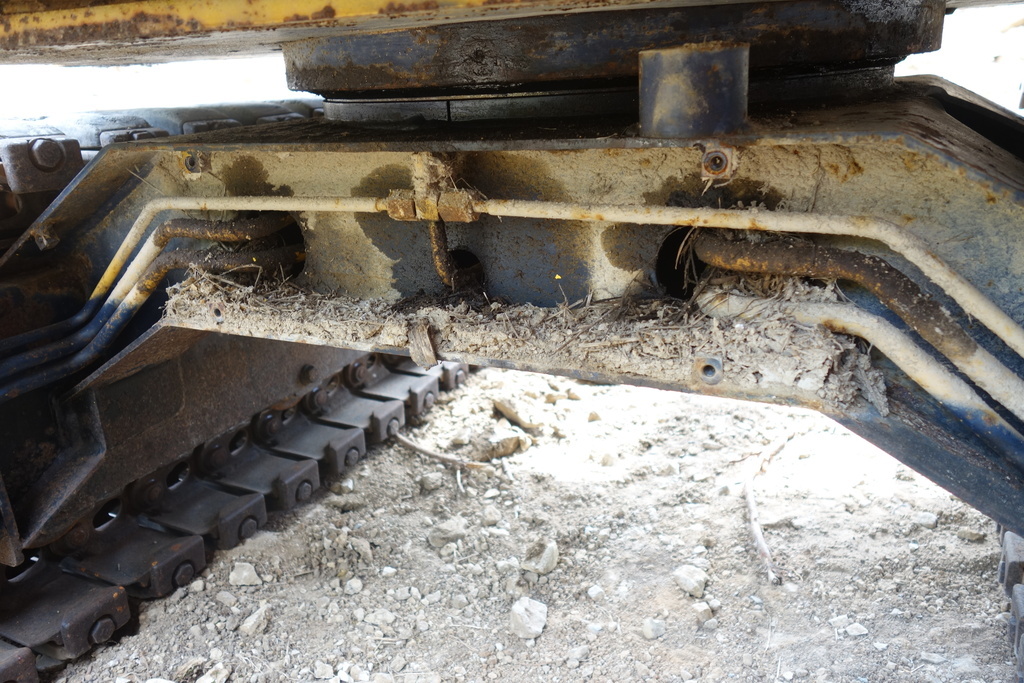
There was some oil dripping from the bottom cover, so I had to lie below the excavator, unscrew 4 screws and I was hit with a pretty heavy bottom plate with several kilograms of grease and dirt on it.
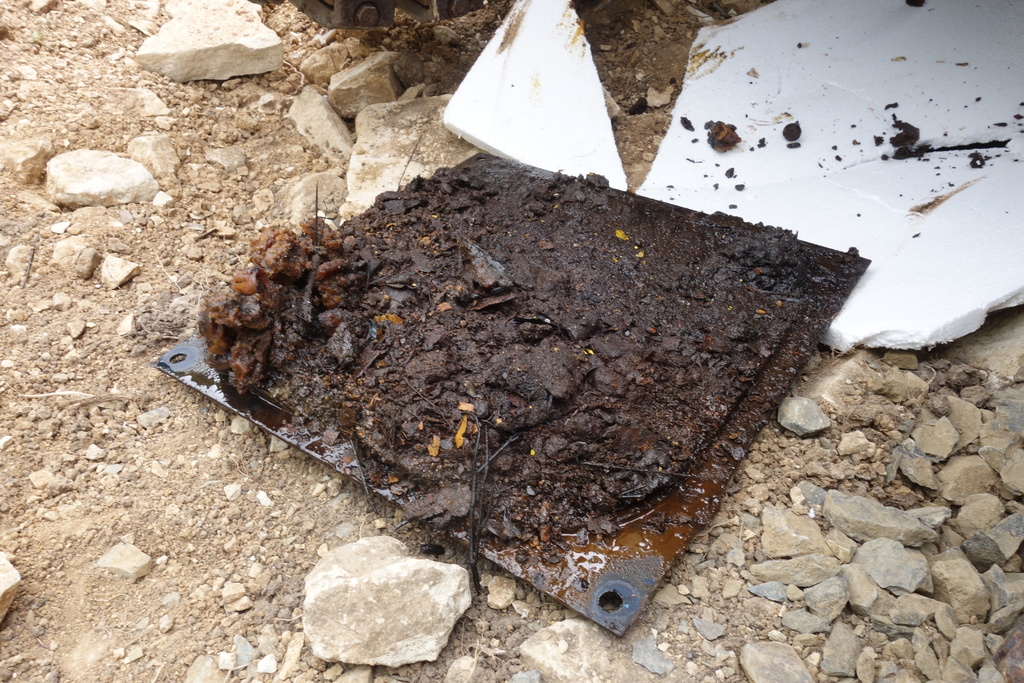
All the grease from the large bottom bearing and swing circle accumulated over the years on the cover and around it. I've spent like two hours removing all of it and cleaning the internals around the swivel joint.
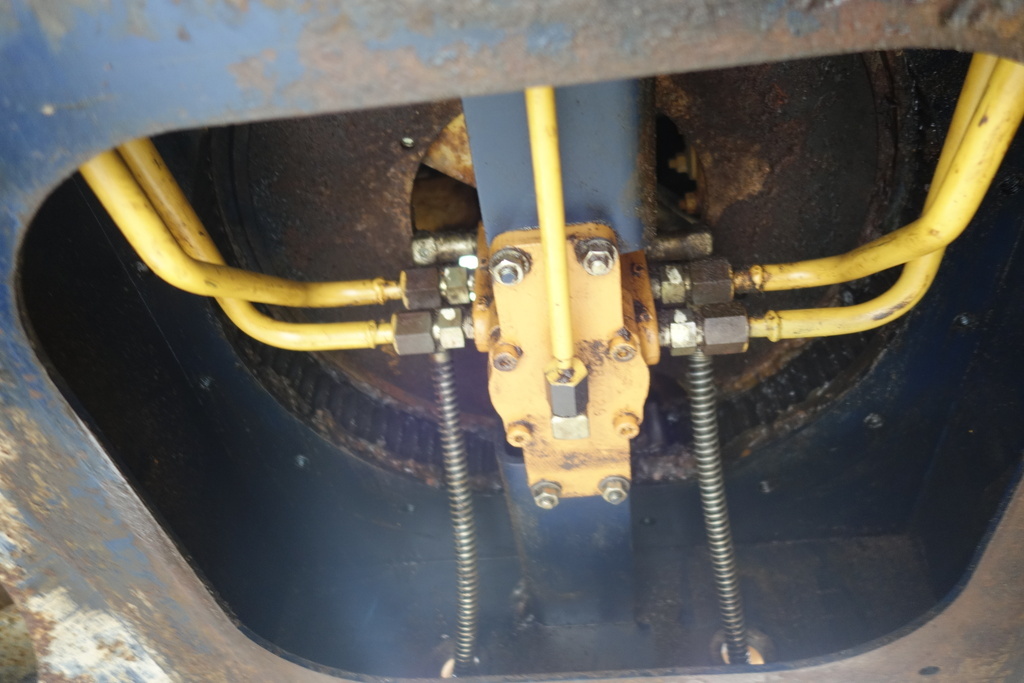
The old grease protected the internals pretty well, no significant rust anywhere inside the undercarriage, time to look where the leaking oil comes from. This required removing all the steel plates below the seat and the seat itself. It's bit annoying, but once in there, all the excavator hydraulic piping and stuff is easily accessible - I really love the guy that designed this excavator, everything is easy to reach, no over-complicated piping in confined spaces like on the modern machines.
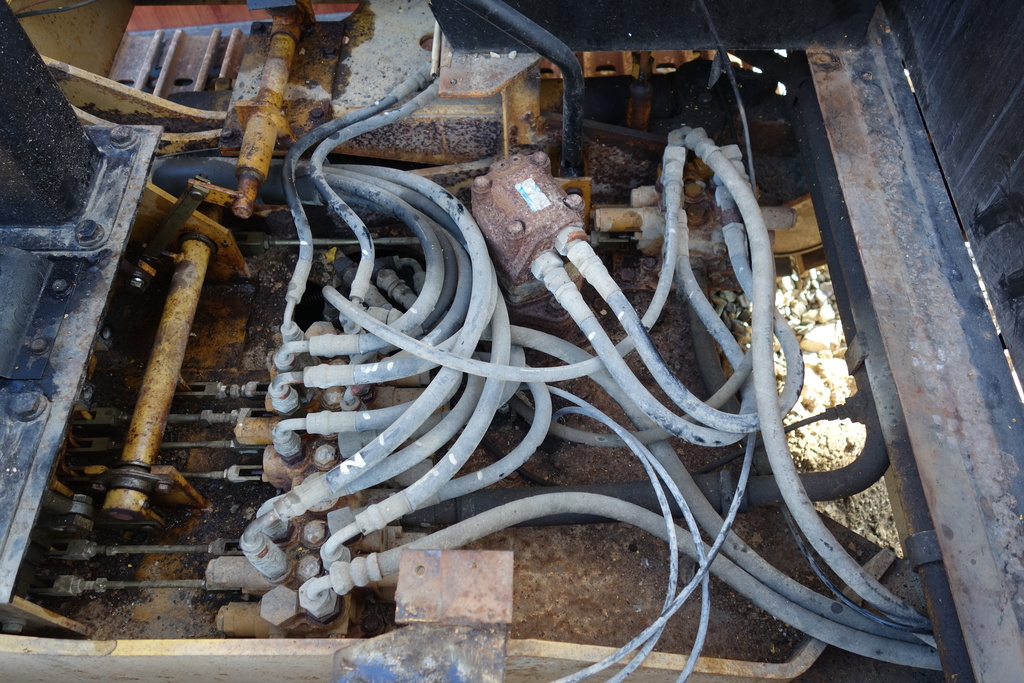
The oil was leaking from top of the swivel joint, but the leak wasn't that bad, I'll look into it during the winter as I need to use the excavator on my home construction now. The internals were a bit rusty from all the water that got inside through the rusted floor panels and stayed there for a while, so I've decides to do some rust removal and protect the steel from further rusting. So a lot of time with a steel brush, a can of brake cleaner, rust convertor and pain later, the internals looked much better.
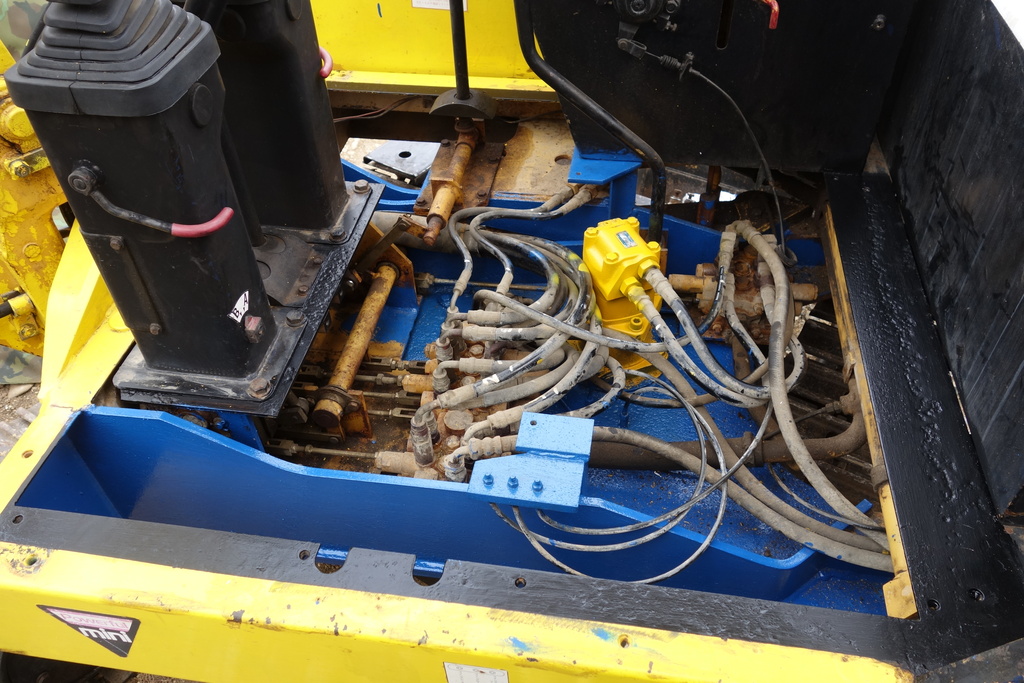
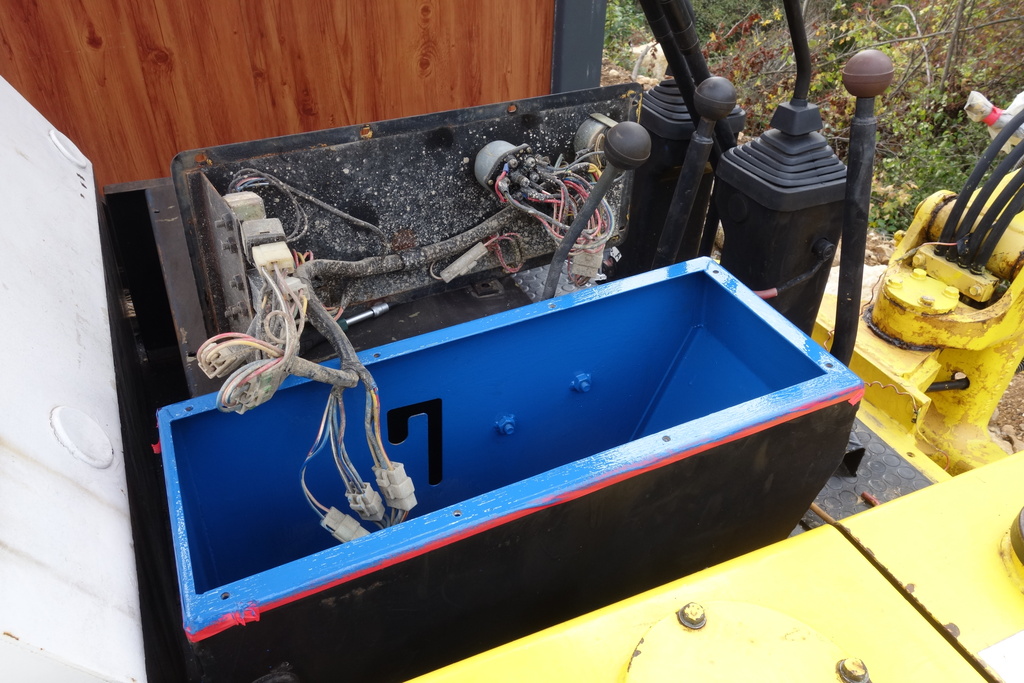
I've also welded up the rusted holes in the floor panels and painted the panels and seat box to avoid further rusting.
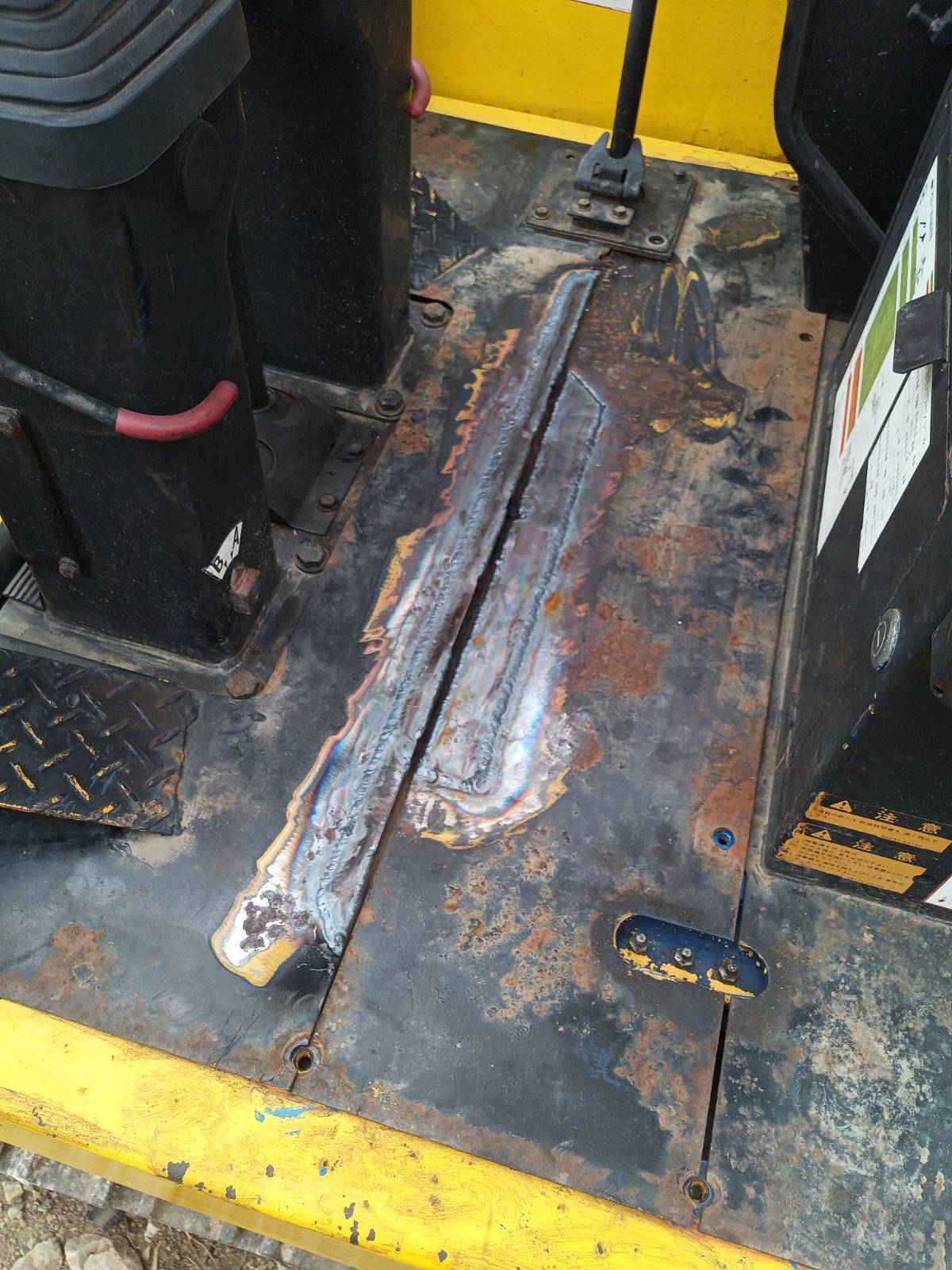
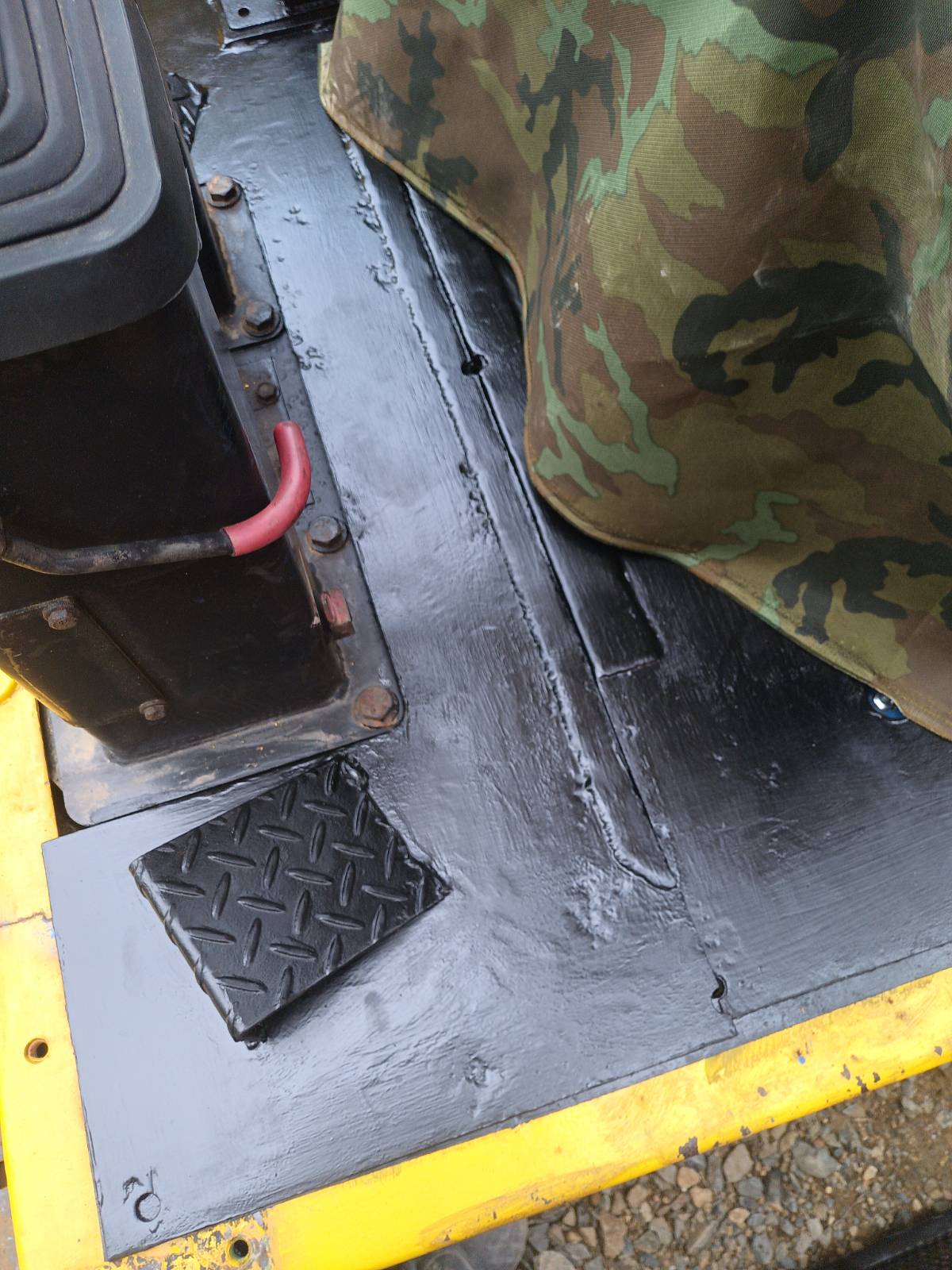
Leaking cylinder repair
The boom cylinder was leaking heavily, it's much easier to fix than the swivel joint, so why not to reduce the leaks at least this way. Removing the cylinder top proved to be a challenging task, the hook wrench I've bought was not enough to get it moving, I've just managed to trip the edge of the "nut". After few more attempts I gave up and brought the large adjustable pliers and a long pipe. This made the top move, although leaving few marks of the pliers teeth.
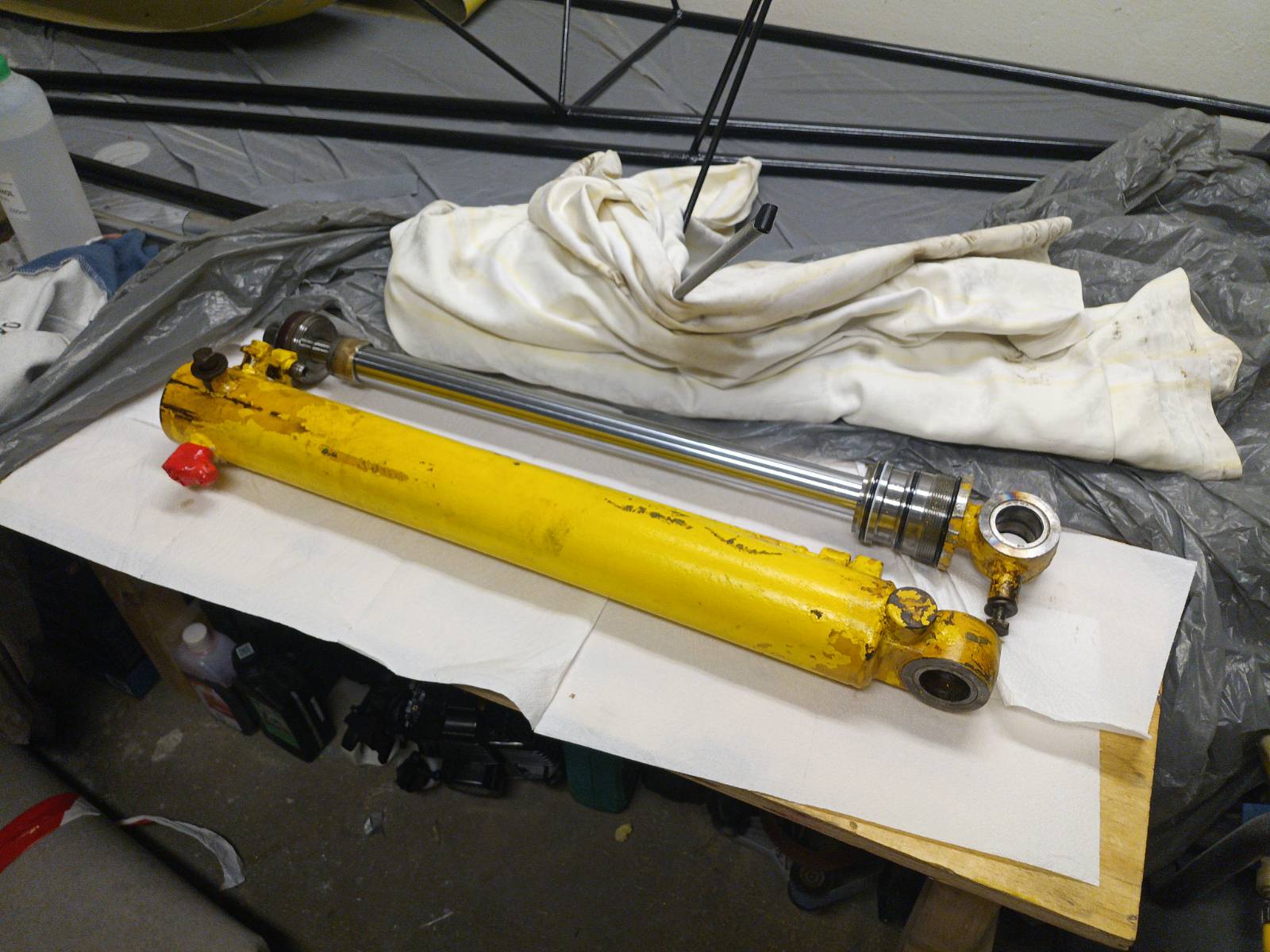
The outermost seal/wiper was completely gone, it fell apart, into dozen of pieces once I've touched it, no wonder it was leaking as hell, all the dirt got through it to the actual hydraulic seal and damaged it. The piston rod was in a perfect shape, the cylinder had no visible scratches or other issues, a peasant surprise. I've managed to buy the wiper, o-rings and the rod hydraulic seal for few bucks in the local shop (for like 1/10 price of the official komatsu parts). It's impossible to get the piston seals locally, but the shape was pretty good, so I didn't change them.
The original wiper seal fell apart and left the metal wiper body in the cylinder top, I was not able to pry it out, it kind of rusted together over the years so I had to put the whole part in the lathe and turn the wiper remains away.
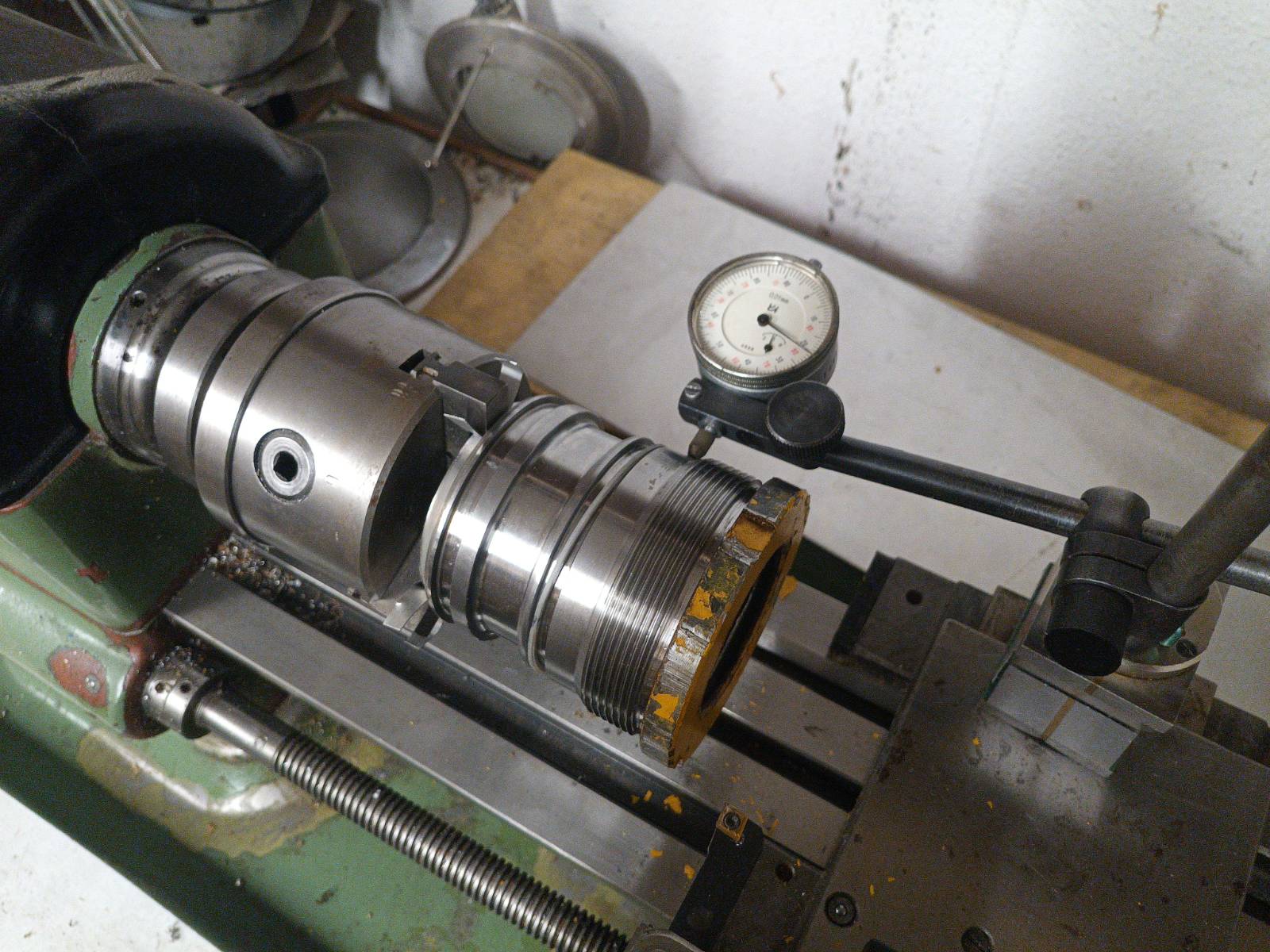
The repair was successful, after reassembling everything together, nothing leaks and the piston is bone dry. There's one more leaking cylinder - the arm one, but the leak is minor and I need the excavator to work, so this can wait for winter time. The boom swing cylinder rod has seen some damage in the past, there's a spot where the chome layer is missing and it's rusting a bit, but it's still just a surface rust and the cylinder is not leaking, so I've sanded the damaged spot to smooth it, added some oil for rust protection and will monitor it for now.
Other repairs
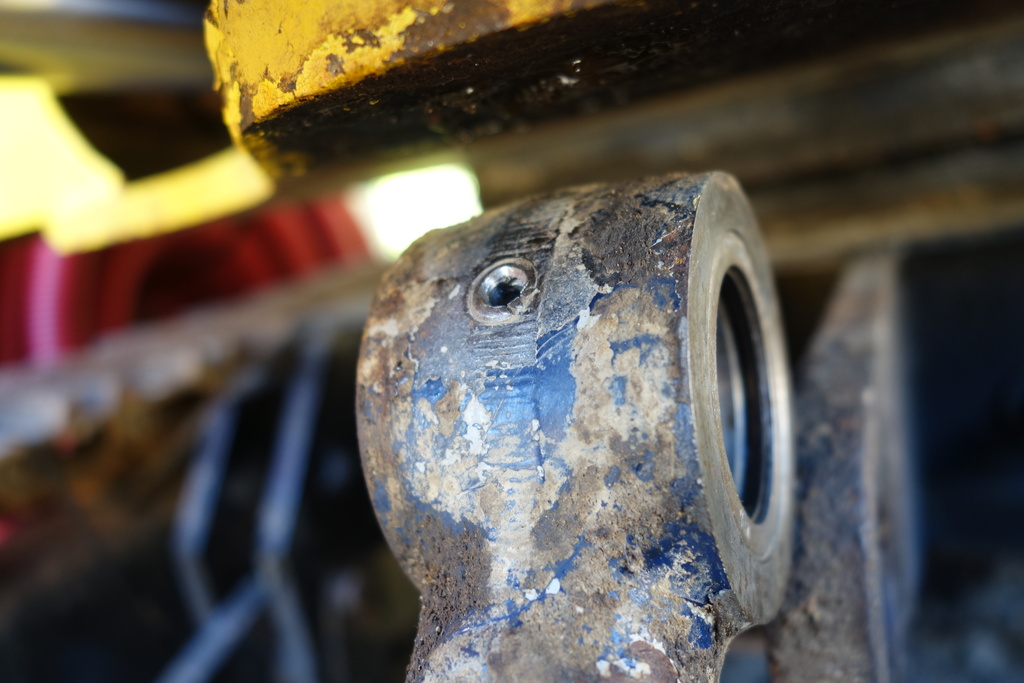
I've replaced all the grease nipples as some were damaged, stuck, etc. Btw, these are not the standard M10x1 thread, but a pipe thread R1/8. The nipple on the blade piston was missing, someone installed it backward, with the nipple pointing below the excavator, so it was not protected from hitting rocks and other hard stuff the excavator moved over. I had to drill the remains out, re-cut the thread and put a new grease nipple in there, and I've also rotated the cylinder head so the nipple now points upward into the hole in the cover plate where it should point from the beginning... Btw, there were also some dust seals missing, so I've added them too while I was at it (found generic ones online for like 1/10 of the original komatsu parts).
The engine compartment canopy was equipped with a gas spring that was showing the age, it couldn't keep the canopy up, so I've found a matching part online, the original markings were useless for determining the spring force, so I've bought 400N variant, it works just well.
Accessories
What a toy would it be if I couldn't buy some accessories:
- grading bucket for grading and moving larger amounts of soil around - bought a custom made, fixed 1 m wide variant
- quick coupler - a custom made spring based type from jar-pol, it's a bit stiff and I need to use a hammer to open/close it, but I guess this is something I can live with for that price...