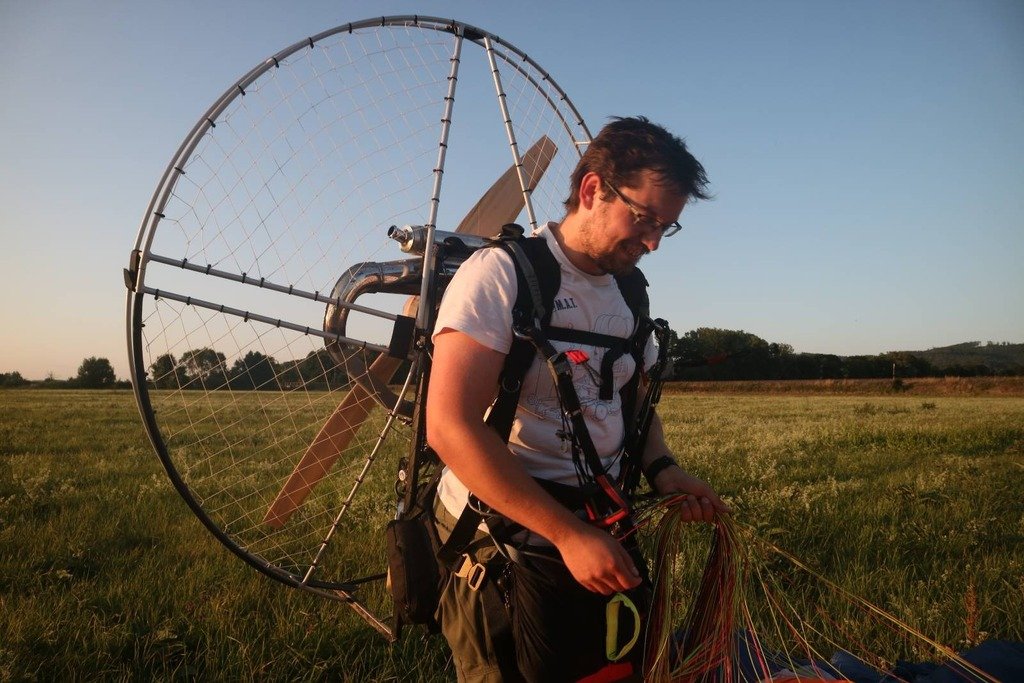
Few years ago I've got a trike flight as a gift for my birthday, after the flight, the pilot showed me the planes in the hangar and stopped by a paramotor hanging on wall. He remembered the good old times he was flying it before switching to the trike and mentioned he is not flying it any longer so it's gonna be for sale. Well, two days later, the paramotor was in trunk of my car, heading to its new home.
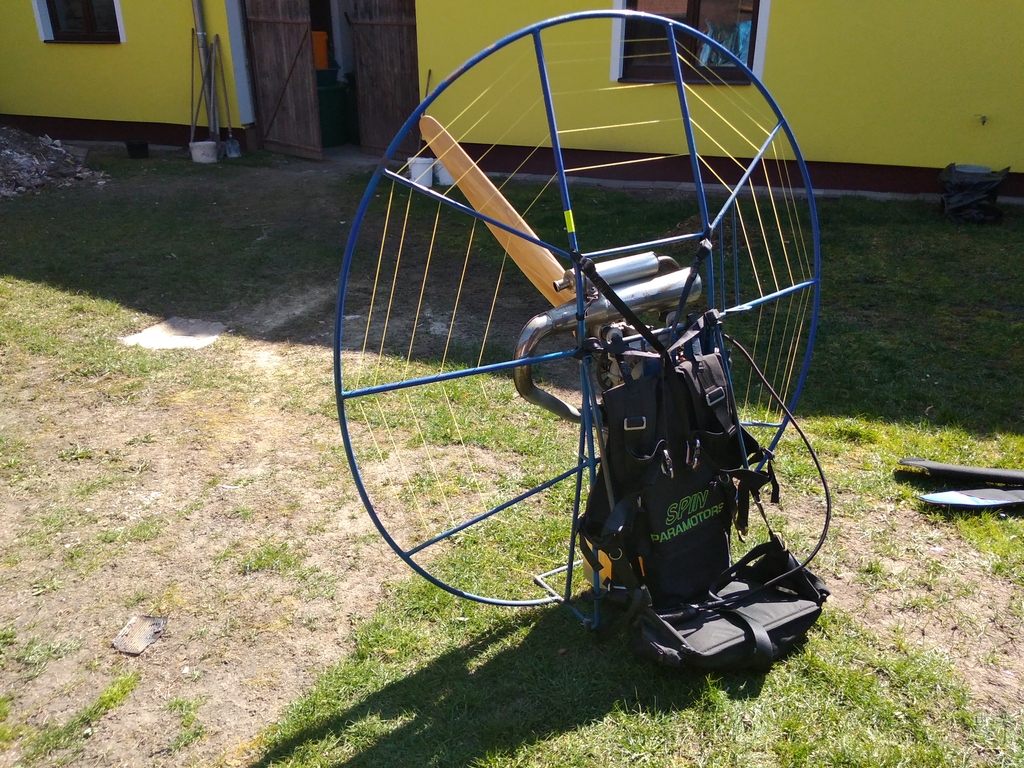
The paramotor was built like 20+ years ago for a competition flying, it had a huge steel frame for a prop 150 cm wide. It was all in one piece, the only way to put it in a small van was to tilt it like 45 degrees to fit. Definitely not something up to the latest PPG standards and not the best piece of equipment to move around. It has a Simonini Mini 2 engine which is also a bit outdated a bit on heavier side, but provides a lot of thrust to push my 100kg body through the air. The previous owner managed to burn a hole into the piston, he had the piston welded and flew some hours on it after repair.
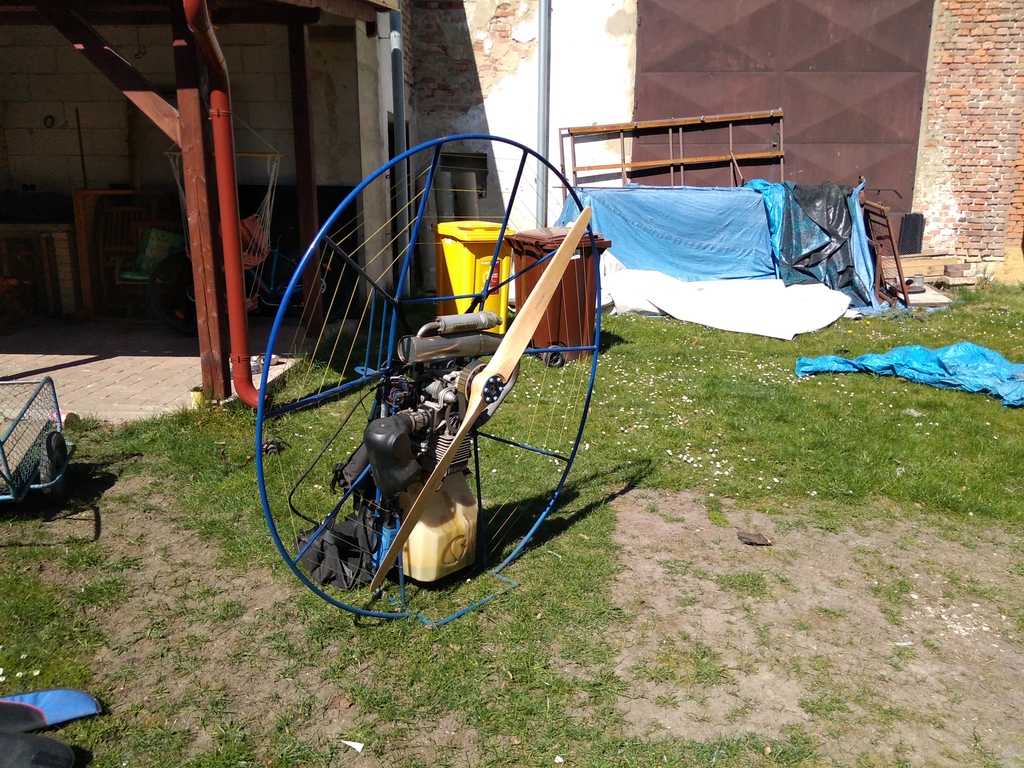
So, to summarize, the paramotor has a huge frame, the engine was repaired some time ago, the ignition wiring is a bit of a mess, there's rust here and there. Hey, that sounds like a new project!
Restoration
The plan was to crack the engine open, change the seals and stuff, check the condition,... And to take it apart completely to repaint the frame...
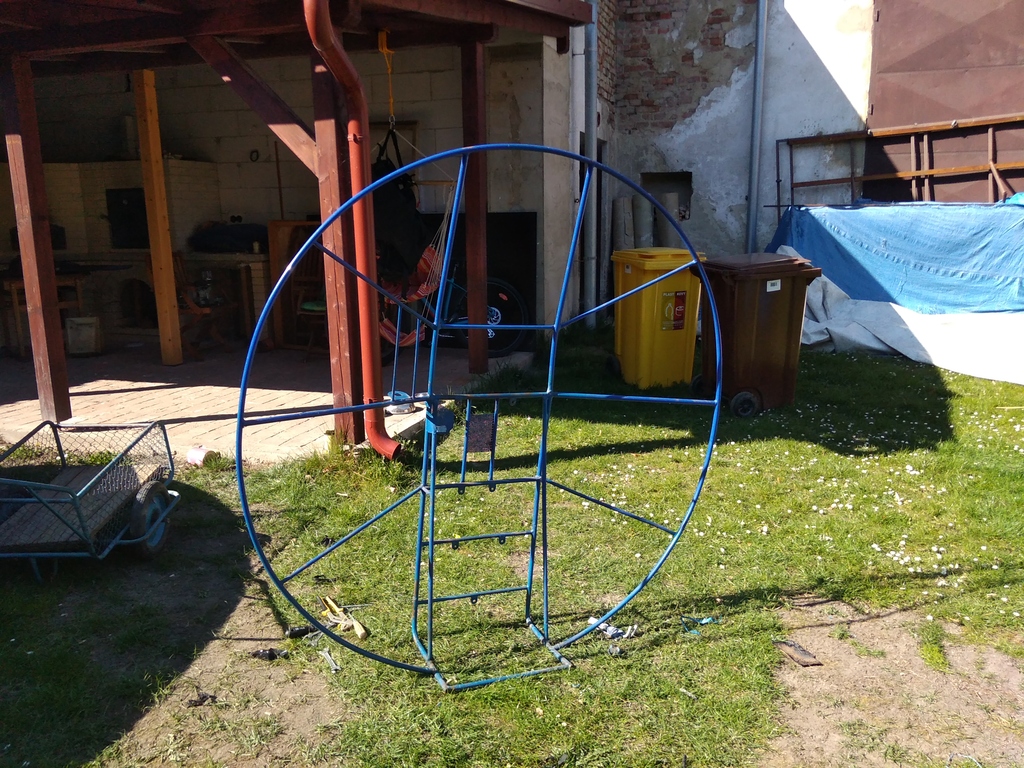
While tearing the thing down, I've found the original builder of this paramotor has his own brand - Spin paramotor - and makes quite nice modern paramotors. As the harness and fuel tank were labeled Spin, I called him to ask if it would be possible to build me a new frame (based on Spin 180 model) modified to fit the Simonini engine. Few weeks later and like 300 USD lighter, I had a perfect modern frame to work with. I had to modify few holes a bit to fit the fuel tank and tilt the intake silencer 180 degrees to fit the frame, but aside from that, the frame was just perfect.
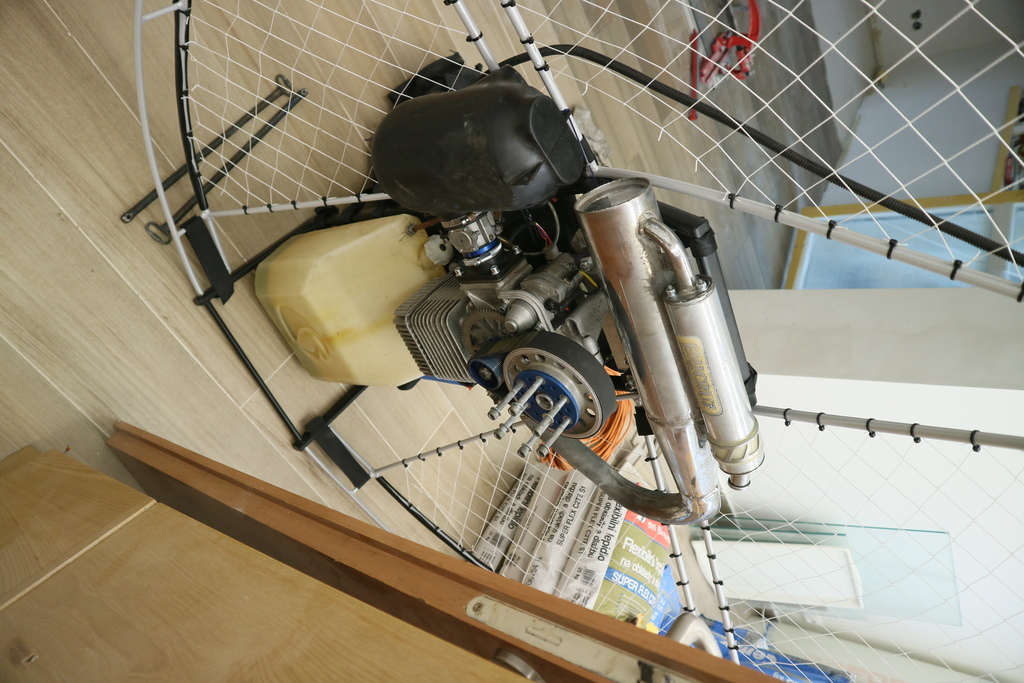
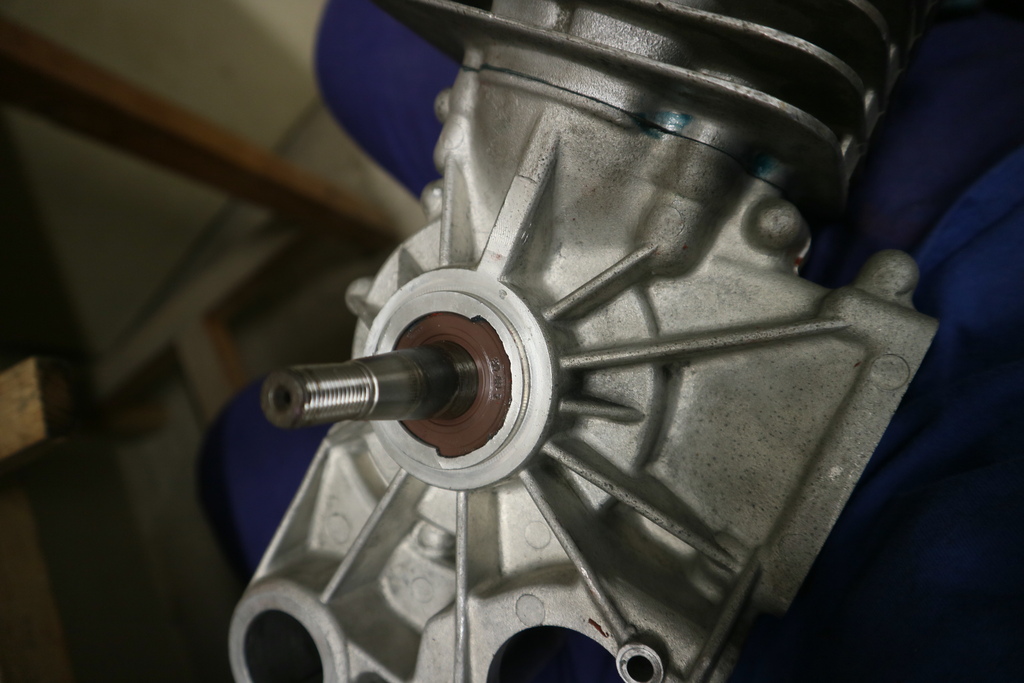
Back to the engine, I've found a broken edge of the seal bore. Today I would have probably welded it with my TIG and machined it to a proper shape, but back the, I didn't have the gear, so I've left it untouched as there were no leaks around the seal visible, it holds well...
Apart from this, the engine was in a pretty good shape, I've build a tool to pull the ignition down, took the engine apart, cleaned and checked it thoroughly. There were no signs of an excessive wear or damage from the burned piston. So the only maintenance I've done to the engine was changing all the bearings and seals - and I've put a new piston in instead of the repaired one.
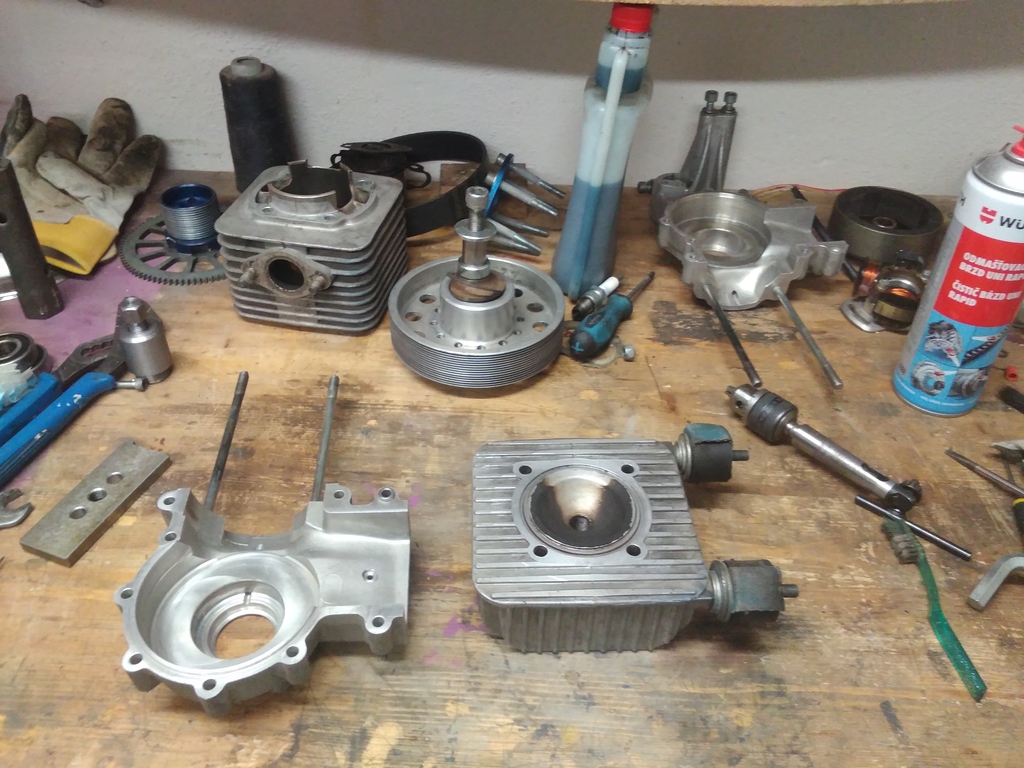
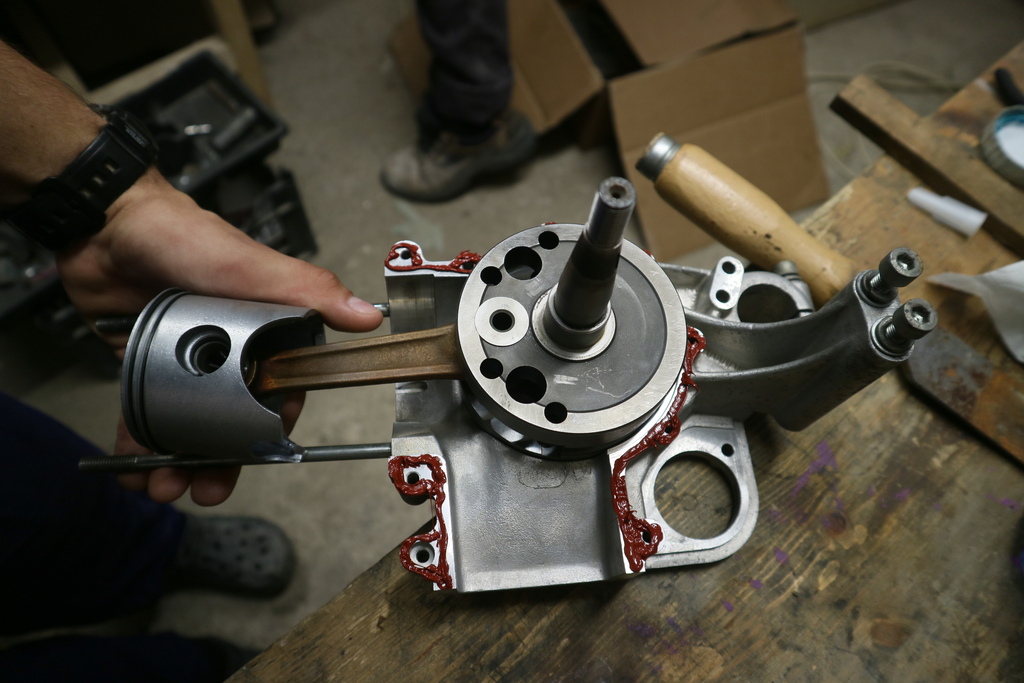
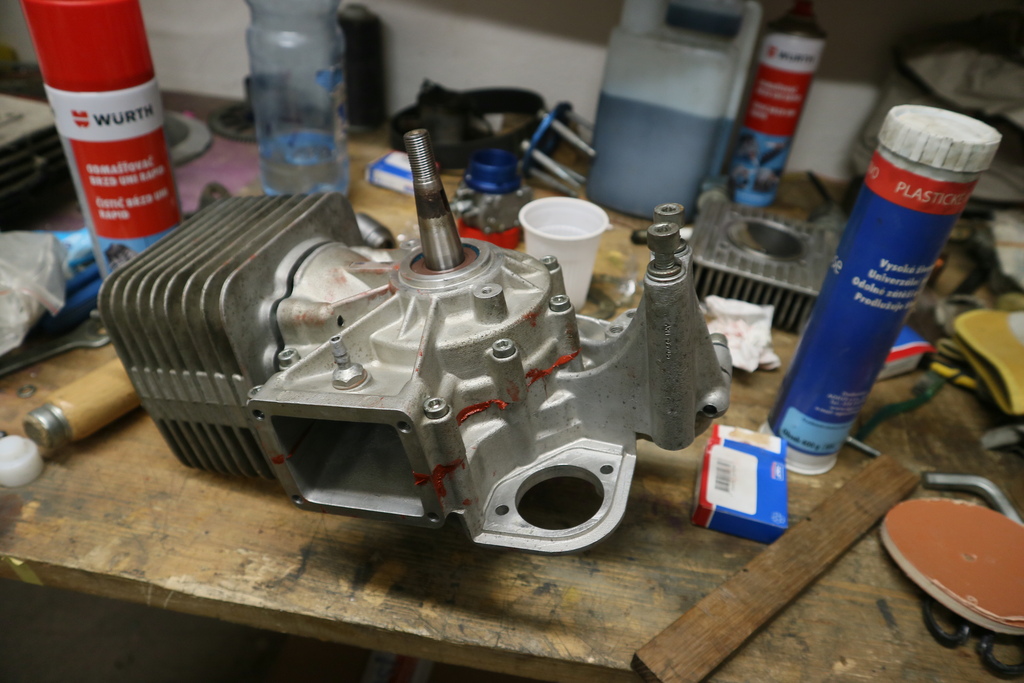
I've rewired the electrical part completely as the original state was a bit sketchy, replaced the throttle cable and wiring, made some spacers for the exhaust to move it away from the frame a bit, cleaned the fuel system, changed the fuel lines, overhauled the carb and done thousand of other things I forgot already.
The guy that made the frame for me is also an inspector, so he had test flown the thing for me and issued an airworthy certificate (things are a little more complicated here in the Czech Republic than in USA), so the beast is ready to fly.
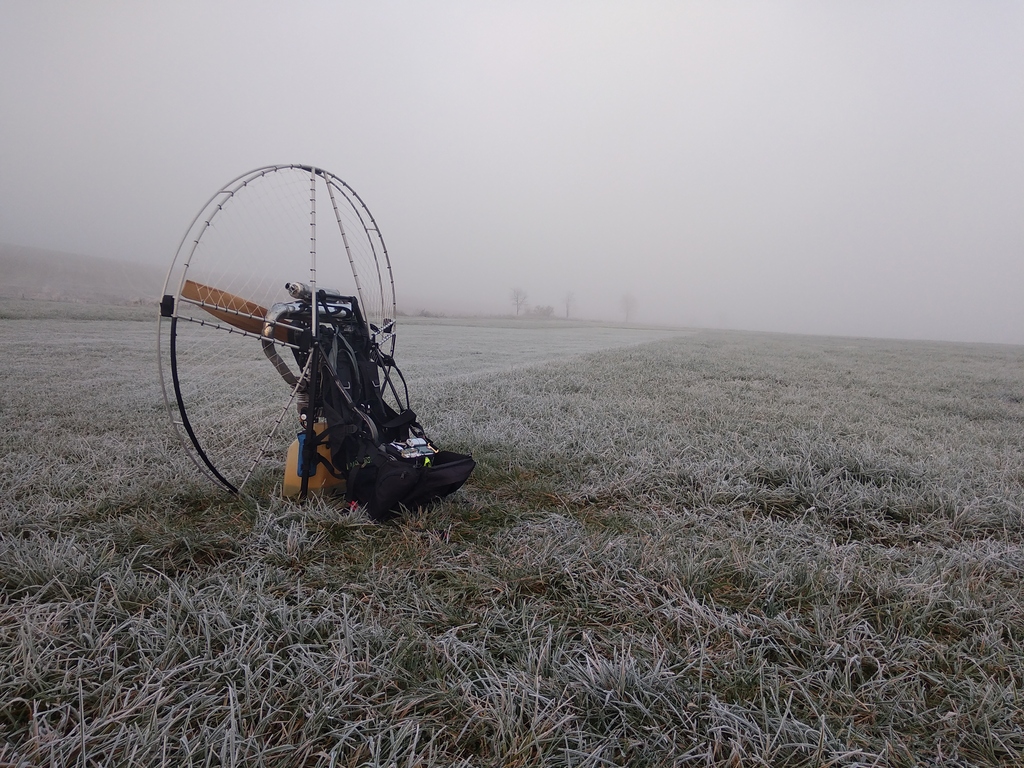
Flying lessons and first emergency landing
I had a paragliding license already back then, but paramotoring requires a different license where I live, so I had to take the flying lessons again.


During the last flight of the training, the engine suddenly stopped few minutes after takeoff, pushing starter button turned the engine, but it remained silent a minute later I was back where I took off looking into the face of a confused flight instructor. The engine had no compression, so the lessons were over (I got the license anyway, maybe for the perfect deadstick landing :D ) and I took the engine out of the frame once again as there was a nasty surprise below the head (well, technically above the head as the engine is mounted upside down):
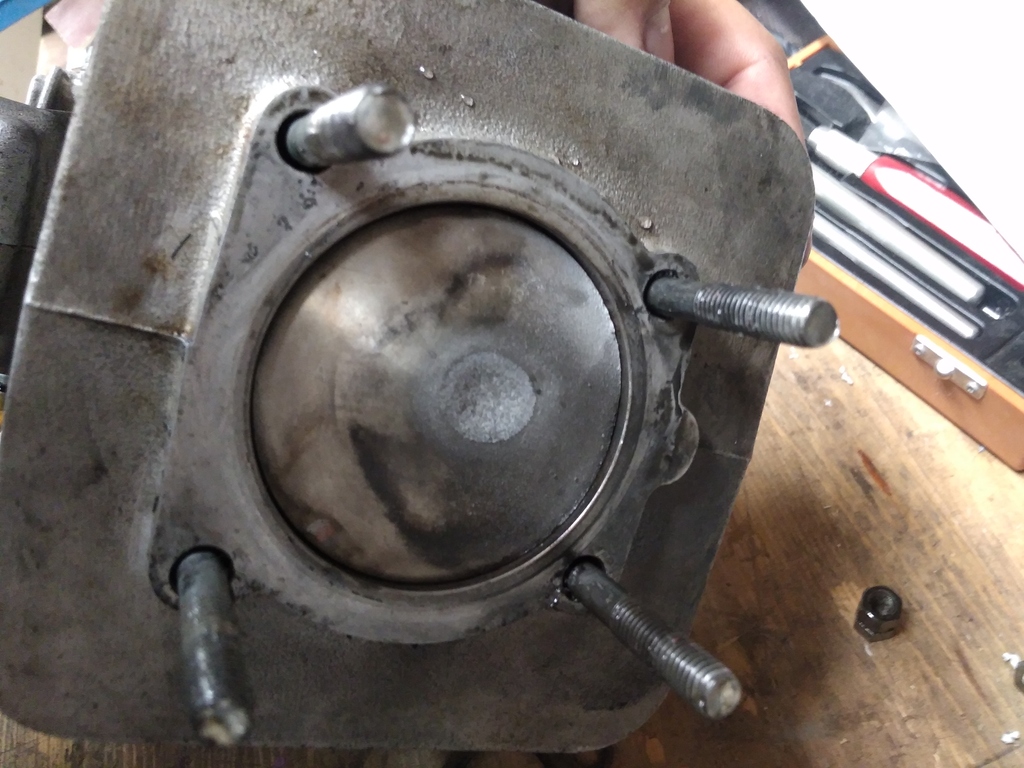
There was a dimple in the middle of the piston, in the brand new piston with like 2 hours on it. The material as the top, directly below spark plug, just burned away. Thankfully the seal below the head gave up before the piston burned through - I've to re-tighten the head screws after first hour as stated in manual. Maybe the head vibrated itself loose, some air got sucked in around the seal, leaning the mixture and increasing the temperature significantly. Or maybe the problem was in the engine timing and carburetor setup - the engine was tuned for competition flying and there was a history of hole burned up in the piston, I've kept the timing as it was before and only re-tuned carb as stated in the engine manual. I guess the later was the cause and the seal blowing was just a pure luck, as running the engine for few more hours would probably burn the piston or seized the engine which would be much more expensive.
So I've got he piston welded (the original parts are quite expensive and I would need to source them from the Italy), cleaned the bearing just to be sure there's no burned material from the piston inside, assembled it together again and started worrying.
Simonini mysteries
I've build a custom digital gauge to measure the cylinder head temperature (CHT) and exhaust gas temperature (EGT, for this, I needed to weld a nut on the exhaust to mount the thermocouple). After measuring the temperatures on the running engine, I was sure something was way off, the cylinder head temperature was usually around 180 degrees C in level flight, quickly reaching 200 after a short climbing. So this was the cause of the burned up piston... The carb was set to quite a lean value for engine to run well, but still within the manufacturer specs.
So I've contacted the Simonini with questions about the timing. I've got few images with no measures to set it exactly, after few emails, I've got the values - timing advance shall be 2mm or 18° from the TDC. So I've built a timing light gun, wrapped sensor around the ignition cable and started moving the stator in a way the timing would end up at 18° degrees exactly. The carb was tuned again, this time ending quite rich.
I've made few test flights, the CHT temperature dropped to just around 100 degrees C which was quite on the cold side, but the EGT in climb quickly reached 600 degrees which is a maximum allowed value. Also the engine power was quite low, I had to run like hell many times the original takeoff distance to take off and the climb rate was quite low.
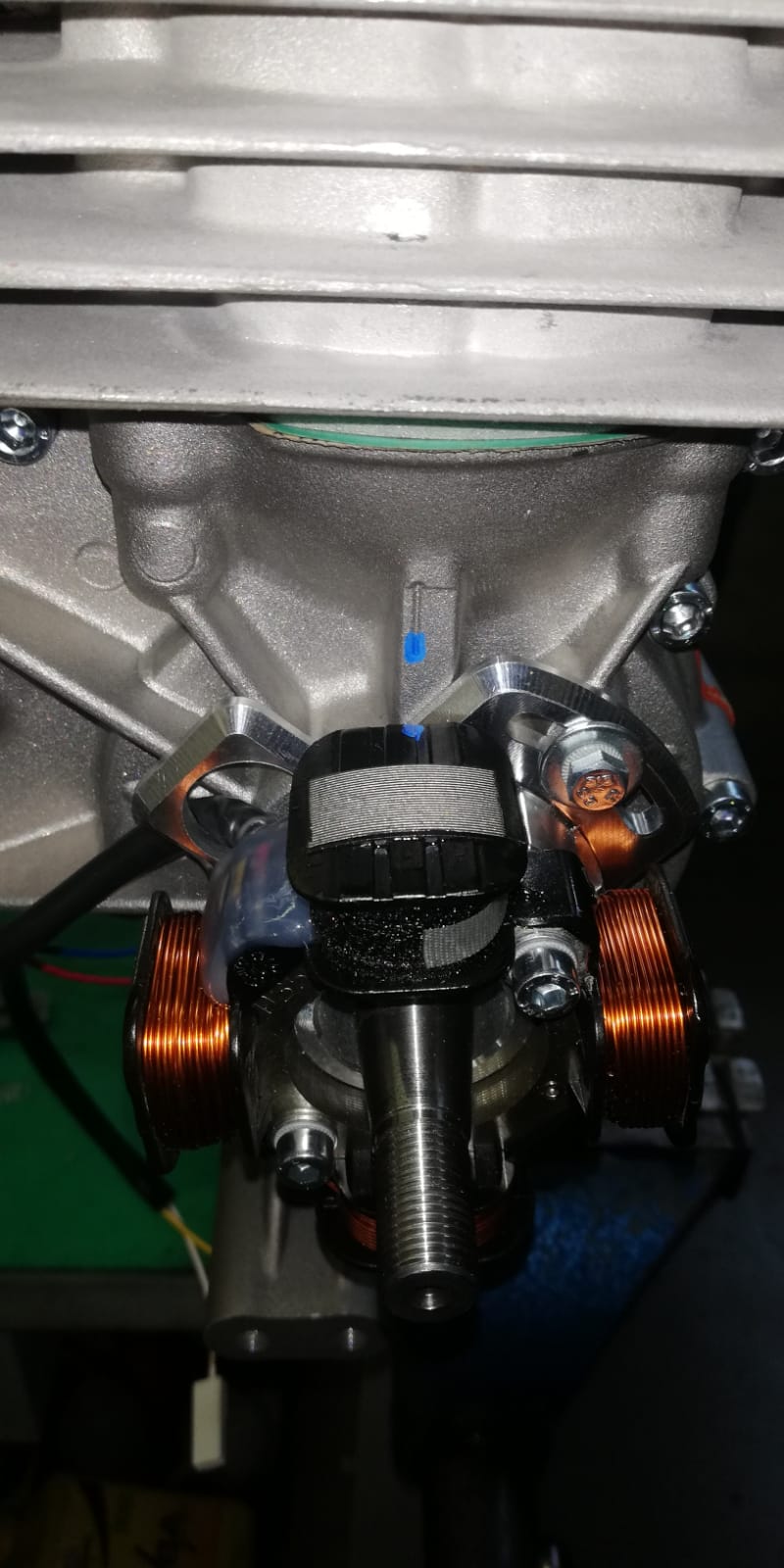
After some digging, I've found a nice blogpost about the engine and most importantly, the ignition timing experiments. The first important detail was that the simonini adviced that guy to use timing advance of 29 degrees, waaaay to different from the 18 degrees that I was advised to use. So I've set the timing to 29 degrees which produced much better engine behavior even with the carb H and L needles set exactly to the stock values. And only now I've noticed the photo with suggested timing I've received from simonini quite matches the actual 29 degrees, so I've fine-tuned the timing to match the photo as exactly as possible which yielded even better temperatures and power. The photo from the simonini is here:
After another test flight I was still not fully satisfied with the engine behavior, the temperatures were better, but it was still quite hard to fine tune the carb to a desired behavior. I've tried rebuilding the carb (changing all the membranes, float valve,...) which changed nothing, so I've finally replaced the whole card for a new one. Finally the fine tuning was possible, I guess the original carb was a bit worn out or the needle seats were damaged by excessive force...
Now the temperatures are around 120 for CHT and 450-500 for EGT in level flight (with Ozone Roadster 3 and my humble 100 kg of live weight), or 150/580 in full throttle climb. Much better! The engine power is sightly lower than it was originally, but I'm quite happy with it this way and prefer a colder engine over peak performance.
Tuning...
The carb rubber flange was starting to show its age, it was not leaking yet, but there were surface cracks everywhere. The OEM replacement was insanely expensive for a piece of a rubber. The PPG inspector suggested to replace the rubber with an aluminum part mounted directly on the engine and separate the carb thermally with a piece of FR-2 or similar material.

It works pretty well and unlike the original rubber, it will work forever. If anyone is interested, the design is on the onshape.
Conclusion
As with my other projects, I've spent a lot of time working on something that I should probably never have bought and I could have saved a lot of time while spending a bit more money on a new or at least a good second-hand machine, but what fun would be in that? It works well now, I've learned a thing or two while debugging the issues which is worth the time invested and I've ended up with a machine that I know inside out.