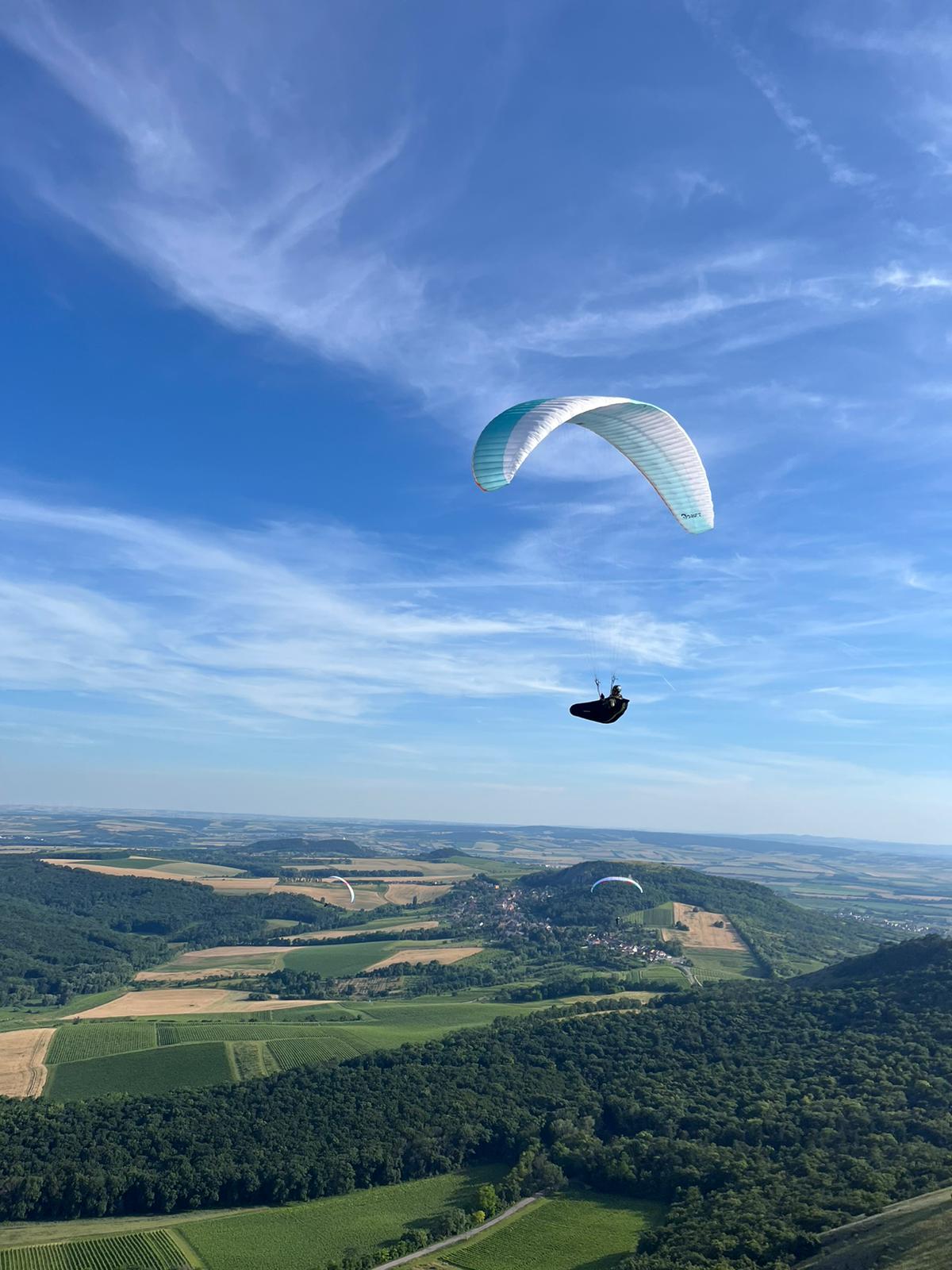
I've bought the Pokfly Extralight 6000 paragliding harness last year. When looking for reviews, I found none, so here's one...
The harness is basically identical to the Karpofly Extralight 3. A short history lesson - the Karpofly was a quite famous brand of paragliding gear, there were the first company that offered a large inflatable protection that started around pilot knees and ended up right below the head, which is something that other companies are still struggling with today (I guess only the Sky Skylighter 4 and BogdanFly are offering similar protectors today, the rest of the companies just use a small pillow directly under pilot bottom, which I wouldn't dare to call a protector...). The company ceased to exist around 2020 for some reason and few years later, the PokFly was born out of its ashes, re-branding the harness with some minor modifications under Extralight 6000.
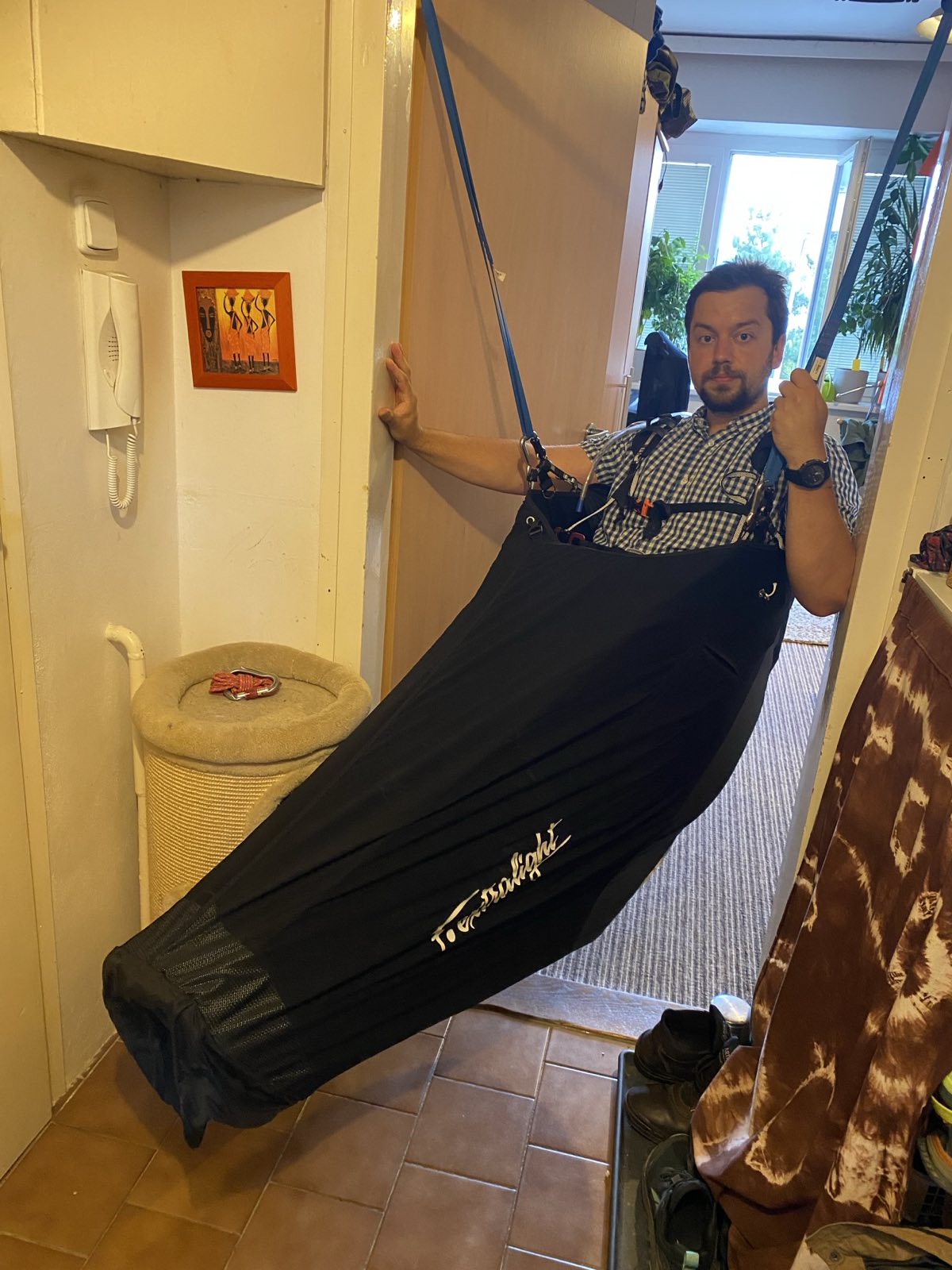
Is mostly identical to the original Karpofly harness, the ID sticker inside even show the Karpofly name as the harness certification remained unchanged (probably not worth all the papework just to change the manufacturer name). There were some changes as the new harness is like 300 g heavier, I guess different materials were used for the cocoon or something like that.
The harness is of a hammock type, but there's a space for a small seat board that can be ordered separately. It's well build, all the seams are clean and all the details are well made. I was kind of confused with a welcro strip sewn around the trunk, but I guess that's for a future upgrade with a tail fin. The trunk is quite roomy, although the opening is not designed that well, it's annoying to close it with some smaller things inside as they tend to fell out while closing the zipper on the other side, I would prefer some kind of internal side walls that would prevent things from falling out and create opening only on the top of the trunk.
The straps are the classical ones, no thin dyneema, the buckles are made from metal and are a classical click-in ones, which is quite nice for such a light harness. The adjustment range is quite wide, although I quite struggled with the precise adjustments in the lumbar area and I guess I never got it perfect and still felt a little bit of discomfort during longer flights. I've also needed to buy a seat board as the straps below the seat were cutting into my thighs without it, but I'm not an ordinary paragliding pilot with my 100 kg of weight and very thick thighs. A normally sized person would probably be OK without the board. Btw, the inflatable protector also doubles as a seat board and back support. I couldn't really sit long in the harness with the protector deflated, but inflating it to a just right pressure made is very comfortable and I felt perfectly supported everywhere. The seat/back surface is just a plain fabric, it's a bit sweaty on warmer days, I would appreciate some padding that would breathe a bit.
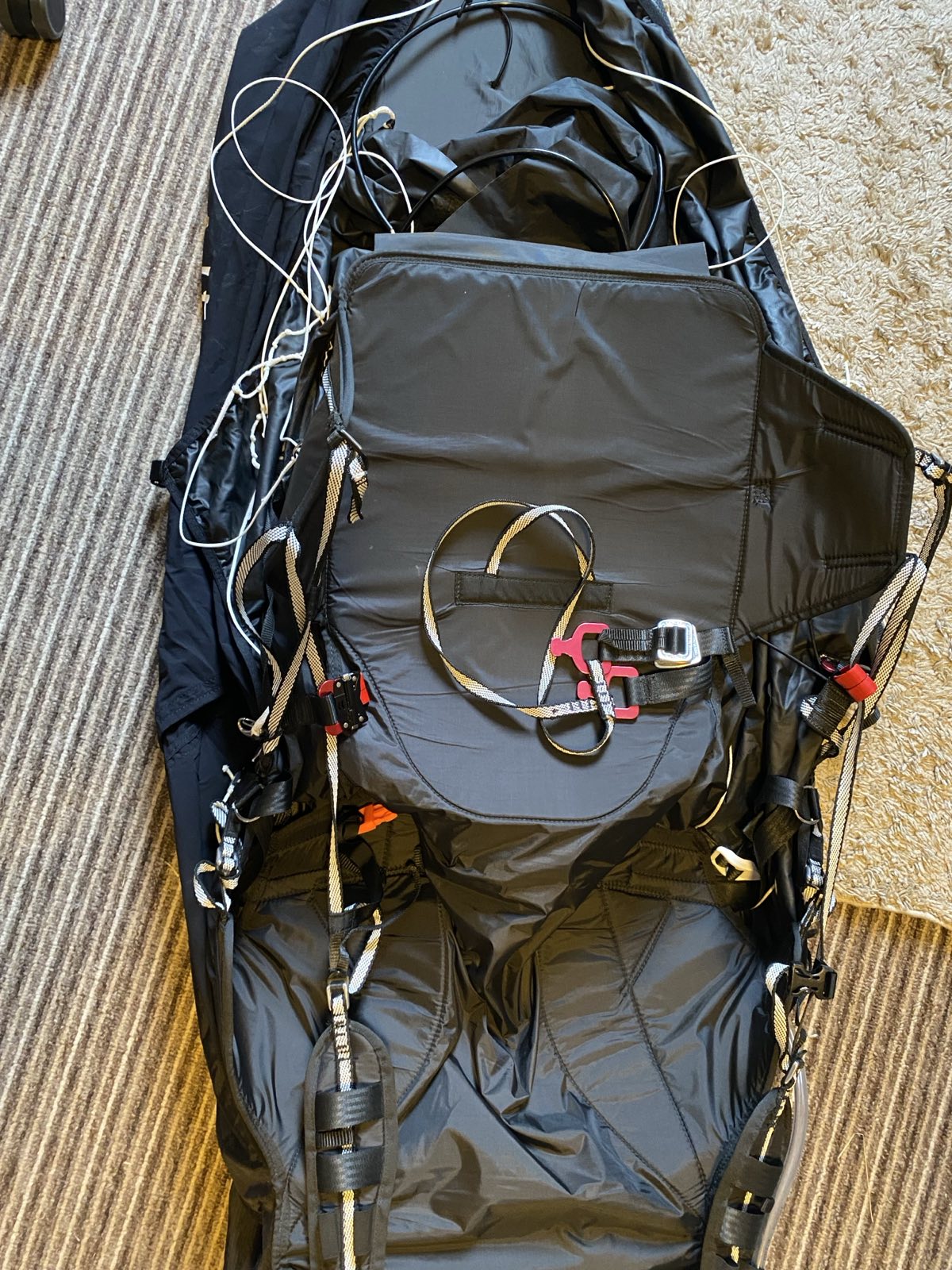
The speed system and cocoon length adjustment is quite straight forward, there are cords with equally spaced knots and the other cord is attached to the knots with a lark head know. A bit annoying to untie and readjust, but it will never slip and always stay where you set it and weights nothing, I quite like it.
The harness is surprisingly durable for it's weight (just a bit above 3 kg), the cocoon material is very nice, a bit stretchy, but thick enough to survive flying through a tree (don't ask me how I know...) without a scratch. Bottom of the harness is reinforced with a strong material that protects it well while being dragged over the field in a strong wind or during a harsh landing in a rocky terrain.
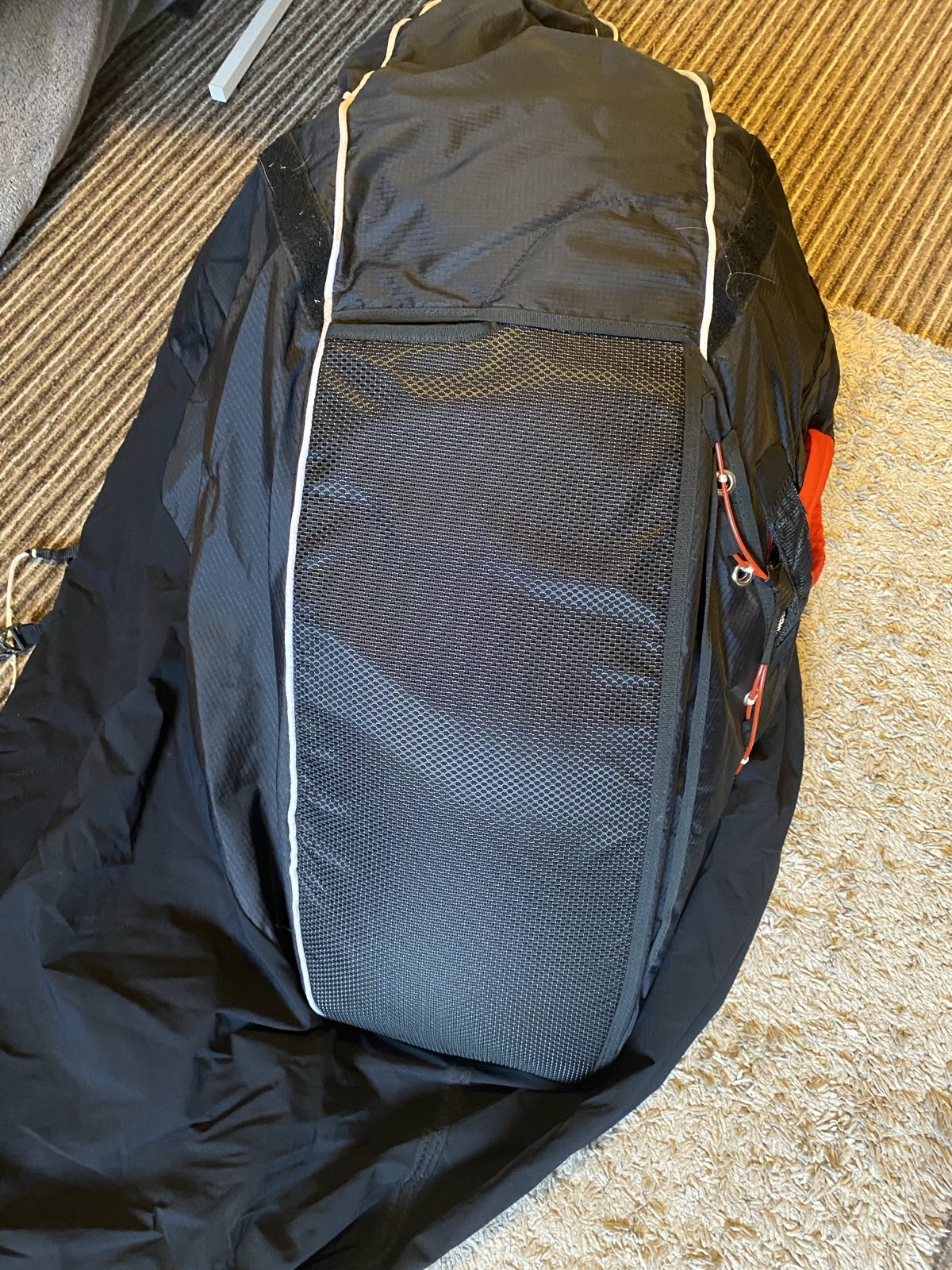
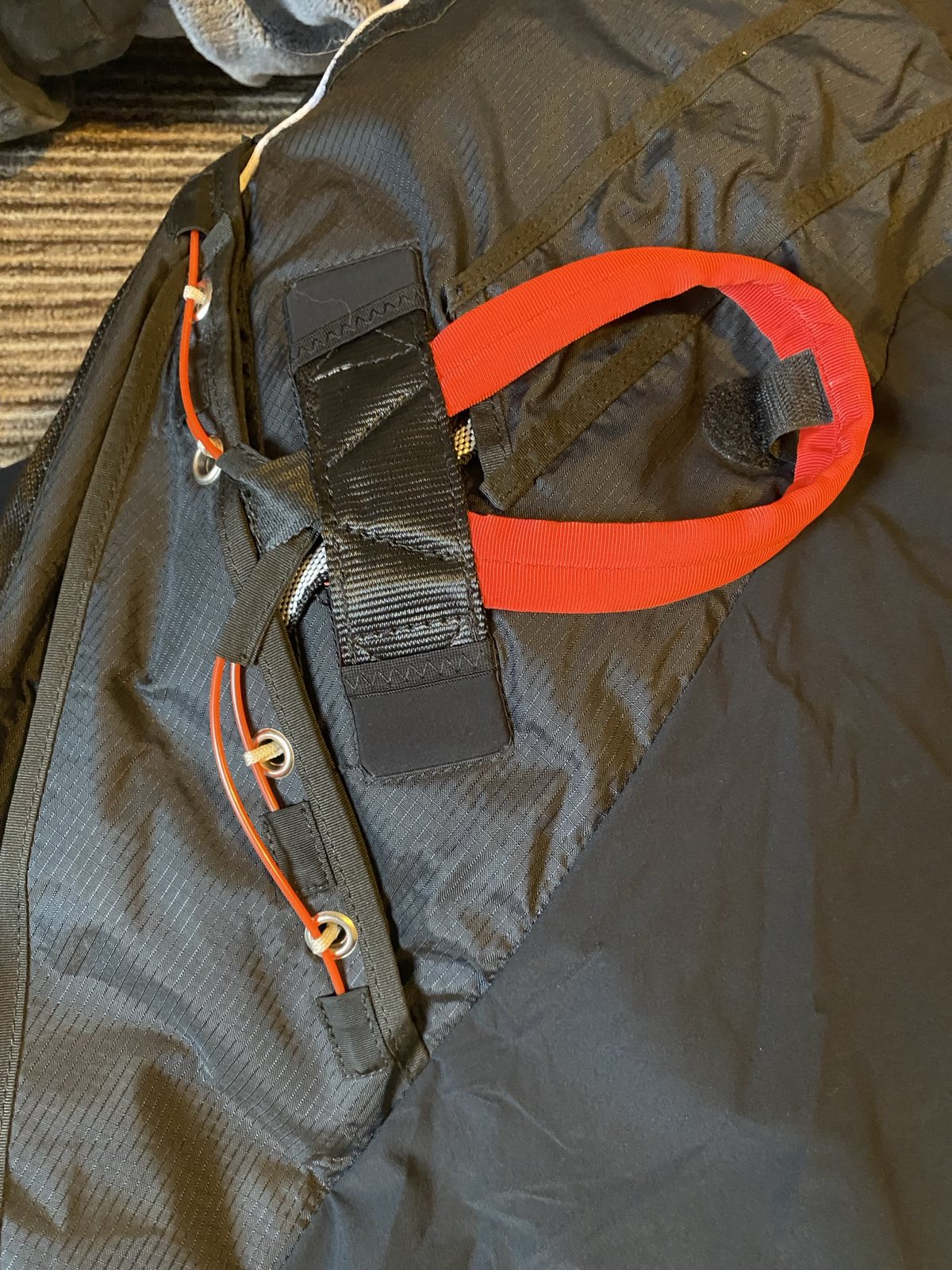
I really liked the reserve handle, it's big, it's right where your hand lands when reaching for it and the closing system with 4 strings seems to be very reliable and I don't thing it's even remotely possible to activate it by a accident. And as the needles are not hidden inside the harness, it's very easy to check the handle/needles before the take off. What I don't understand is the size of the reserve compartment. It's a lightweight harness so one would expect only a smaller light reserve would fit, but there's enough space for a huge tandem reserve and there would still be some space left, so my reserve tends to move inside a lot. Also the compartment is not part of the main harness, but it's rather sewn inside the cocoon and only held together with the inner harness by a velcro which seems a bit strange to me and makes the compartment a bit wobbly when handling the harness on the ground (but you won't notice anything in the air, so it's probably OK). I would prefer to have the compartment much smaller and sewn directly to the internal structure to keep the reserve in place with no free motion at all.
The cockpit/dash is huge, it would fit an ipad without problems, it comes with a nice sun shade and it's removable (velcro on the back) which is nice. I holds the position/angle perfectly, I always have to align the dash on other harnesses after takeoff, but this one is always positioned just right. On the other side, the dash placement is just horrible - first of all, it's way too far from your eyes, even if you have sharp eyes, it's hard to read anyting on your vario in turbulence, other harnesses usually place the cockpit very close to the main carabiners, but here is closer to your knees than your hips. It's also surprisingly hard to reach during flight as the harness straps are in the way. And finally, lower half of the dash is hidden behind the chest strap. I don't see why the manufacturer placed it there while it wouldn't be a problem to move it closer to the pilot and like 10 cm higher, then it would be perfect. This is something that could be fixed easily with a sharp scissors and bit of sewing if you are brave enough. And I almost forgot, there's no storage behind the dash, there's no place to put your power bank, snacks for longer flights,...
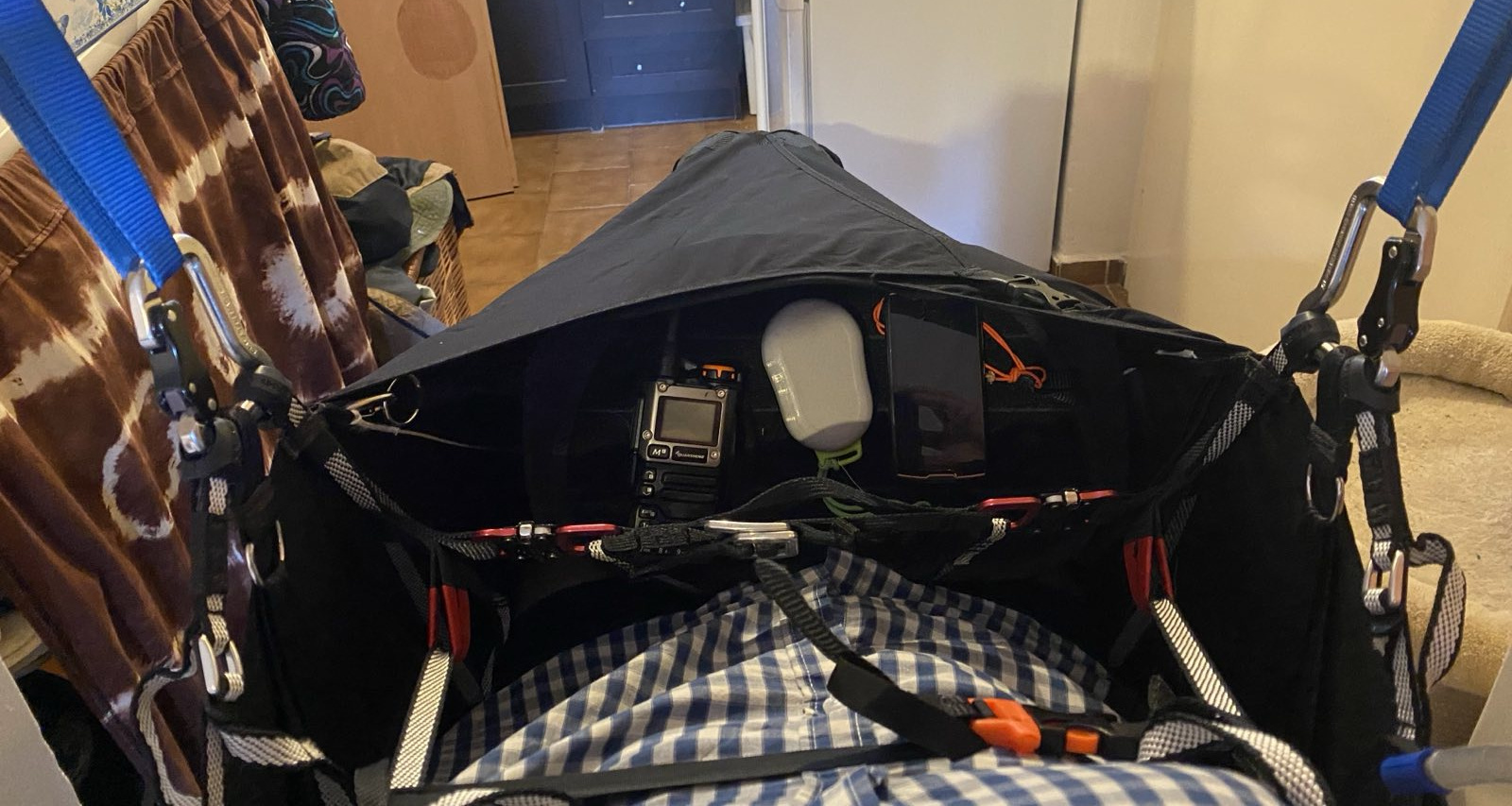
There are two big and deep pockets on the cocoon sides, unfortunately there's no way to close them (no zipper, no velcro) or tie anything to them (e.g. camera) so I always felt insecure I could lost anything that I would put there on takeoff.
The leg straps are quite thin with no padding, hanging on your legs during take off and landings is not the most comfortable thing to do and ground handling is something you should rather get a different harness for, but I guess that's the price for the low weight. The chest strap adjustment (distance between carabiners) tends to get loose and widen during buckling into to harness and getting ready to take off. I was ok on my old low EN-B glider where I was flying with strap wide open to get at least some feeling what the air is doing to the wing, but after switching to Drift Hawk I felt the wing is bit too communicative and needed to reduce carabiners distance a bit so it become annoying to tighten the strap again after every second takeoff. Not sure if there's some "ABS" system incorporated to the harness, but it felt quite alive under the Hawk, I would use a bit more of roll dampening for longer flights.
And what I really love about this harness is the inflatable protector. The KarpoFly was the very first company to start making these. It's light, it's huge when inflated (very thick and it goes from your knees to the neck), it has a very good impact rating (IIRC below 30g, the "futuristic space material koroyd" is more like 50g and the modern "pillow" like inflatables from WV and other manufacturers would protect you only if you dropped plain straight to your ass) and is surprisingly durable (I was dragged by the wind one time, hitting the ground hard with my back - I felt nothing and the protector stayed undamaged, no leaks). The only downside is the pre-flight inflation, especially after hike to the launch, where you are glad you can finally catch your breath again. The moisture in your breath tends to generate some fungus in the inflation tube and the protector itself, the tube is transparent and it turned green inside after few weeks of usage. I had to clean it up with tools originally intended for camelbag cleaning. To avoid any further risk of fungus growth, I bought a small battery powered air compressorto replace my mouth and lungs.
Conclusion
I flew the harness for about 20 hours in various conditions and finally decided to sell it to get something a bit more closer to my anatomy as the back support was still not where I wanted it to be and also to get something with a bit more dampening as I often felt tired after a hour or so from being thrown around in strong conditions.
Pros:
- Light, but very durable, feels very robust, not like the other ultralight harnesses.
- A huge inflatable protector, one of the best ones on the market. Your spine will thank you if you ever crash land.
- Classical click-in buckles, not the modern interleaving ones - fast to close, fast to open, easy to check, no change of opening accidentally when preparing for the take off.
- Large dash panel with a sun shield, will fit even a larger tablet and the position is held perfectly under any circumstances, no need to flip it to a correct angle after takeoff.
- Very good design of the reserve handle and needles securing the reserve compartment
- The cocoon material is nice, durable, the cocoon itself is easy to enter and leave and it stays closed with no flapping or other issues
Cons
- It's possible to open the buckles under load (which was not on my previous Gin Genie Lite 1), same buckles are used by other manufactures, so it's more like a feature than a bug, but I don't like that.
- The dashboard position is really wrong, it's way too far from the eyes, half of it is hidden behind the horizontal straps and it's hard to reach all the corners during flight.
- No storage area in the dashboard, the only in-flight accessible pockets are the ones on the sides of the cocoon and there's no way to close them (no zipper or velcro)
- The reserve compartment is way to big - it's a lightweight harness, but a large tandem reserve would fit and there would still be enough space for another one. Also it's part of the cocoon, no the internal harness, it feels a bit "loose".
- The trunk opening could have an internal side "walls" so it would be accessible only from the top, now things tend to fall from the sides as you are trying to close it.
- I was missing a one more adjustment in the lumbar area, I just couldn't get the adjustment just right for my back
- The camelbag compartment is a little on the smaller side, width is ok, but it could be a bit longer, my camelbag was sticking out of it way too much
- The carabiner distance adjustment tends to slip when handling the harness before/after flying